


- Afhalen na 1 uur in een winkel met voorraad
- Gratis thuislevering in België vanaf € 30
- Ruim aanbod met 7 miljoen producten
- Afhalen na 1 uur in een winkel met voorraad
- Gratis thuislevering in België vanaf € 30
- Ruim aanbod met 7 miljoen producten





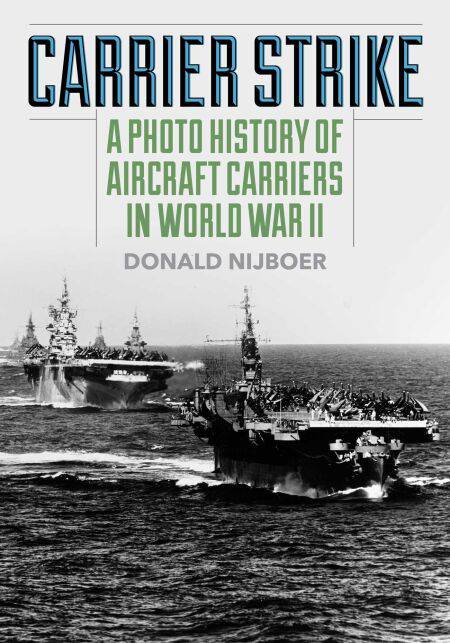
Carrier Strike E-BOOK
A Photo History of Aircraft Carriers in World War II
Donald Nijboer
E-book | Engels
€ 24,59
Uitvoering
Omschrijving
Among many other developments, World War II saw naval warfare shift from the battleship to the aircraft carrier, which remains one of the iconic weapons of the war and the core of modern battle fleets. Developed in the 1920s and 1930s, the aircraft carrier came into its own in World War II and featured prominently in numerous battles, including the Coral Sea, Midway, Guadalcanal, and Leyte Gulf. Later in the war, with many of its own carriers destroyed and its carrier-borne air force crippled, the Japanese relied on kamikazes to replace its aerial strike force and to attack the United States’ carrier force, and the United States used its carriers to attack the Japanese homeland.
In this photo history, Donald Nijboer traces the history of aircraft carriers, from their early development just after World War I, to the Japanese carrier-borne attack on Pearl Harbor, through the great battles of the Pacific War, which featured some of military history’s great ships: the Yorktown, the Enterprise, the Hornet, the Lexington, and other vessels. Special sections cover British carrier operations in the Indian and Pacific Oceans, as well as the limited carrier operations of the German Navy, including the Graf Zeppelin.
In this photo history, Donald Nijboer traces the history of aircraft carriers, from their early development just after World War I, to the Japanese carrier-borne attack on Pearl Harbor, through the great battles of the Pacific War, which featured some of military history’s great ships: the Yorktown, the Enterprise, the Hornet, the Lexington, and other vessels. Special sections cover British carrier operations in the Indian and Pacific Oceans, as well as the limited carrier operations of the German Navy, including the Graf Zeppelin.
Specificaties
Betrokkenen
- Auteur(s):
- Uitgeverij:
Inhoud
- Aantal bladzijden:
- 200
- Taal:
- Engels
Eigenschappen
- Productcode (EAN):
- 9780811772952
- Verschijningsdatum:
- 14/12/2023
- Uitvoering:
- E-book
- Beveiligd met:
- Adobe DRM
- Formaat:
- ePub



Alleen bij Standaard Boekhandel
Cadeau

AANGERADEN


Beoordelingen
We publiceren alleen reviews die voldoen aan de voorwaarden voor reviews. Bekijk onze voorwaarden voor reviews.