


- Afhalen na 1 uur in een winkel met voorraad
- Gratis thuislevering in België vanaf € 30
- Ruim aanbod met 7 miljoen producten
- Afhalen na 1 uur in een winkel met voorraad
- Gratis thuislevering in België vanaf € 30
- Ruim aanbod met 7 miljoen producten





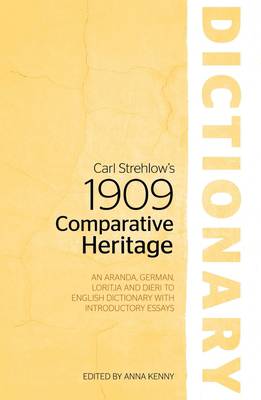
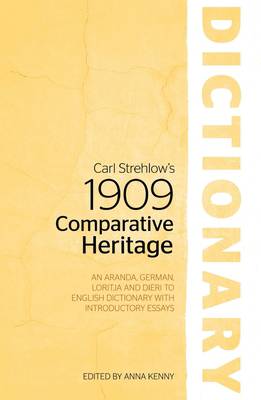
Carl Strehlow's 1909 Comparative Heritage Dictionary
An Aranda, German, Loritja and Dieri to English Dictionary with Introductory Essays
€ 62,95
+ 125 punten
Omschrijving
Carl Strehlow's comparative dictionary manuscript is a unique item of Australian cultural heritage; it is a large collection of circa 7,600 Aranda, 6,800 Loritja (Luritja) and 1,200 Dieri to German entries compiled at the beginning of the twentieth century at the Hermannsburg Mission in central Australia. It is an integral part of Strehlow's ethnographic work on Aboriginal cultures that his German editor Baron Moritz von Leonhardi published as Die Aranda- und Loritja-Stämme in Zentral-Australien (Strehlow 1907-1920) in Frankfurt. Strehlow and his editor had planned to publish a language study that included this comparative dictionary, but it remained unpublished until now due to a number of complicated historical and personal circumstances of the main characters involved with the dictionary. Strehlow's linguistic work is historically and anthropologically significant because it probably represents the largest and most comprehensive wordlist of Indigenous languages compiled in Australia during the early stages of contact. It is an important primary source for Luritja and Aranda speakers. Both languages are spoken in homes and taught in schools in central Australia. The reasons for presenting this work as a heritage dictionary-that is, as an exact transcription of the original form of the handwritten manuscript-are to follow the Western Aranda people's wishes and to maintain its historical authenticity, which will prove to be of great use to both Indigenous people and scholars interested in language.
Specificaties
Betrokkenen
- Uitgeverij:
Inhoud
- Aantal bladzijden:
- 398
- Taal:
- Engels, Duits
- Reeks:
Eigenschappen
- Productcode (EAN):
- 9781760462062
- Verschijningsdatum:
- 10/08/2018
- Uitvoering:
- Paperback
- Formaat:
- Trade paperback (VS)
- Afmetingen:
- 153 mm x 234 mm
- Gewicht:
- 734 g

Alleen bij Standaard Boekhandel
+ 125 punten op je klantenkaart van Standaard Boekhandel
Cadeau

AANGERADEN


Beoordelingen
We publiceren alleen reviews die voldoen aan de voorwaarden voor reviews. Bekijk onze voorwaarden voor reviews.