


- Afhalen na 1 uur in een winkel met voorraad
- Gratis thuislevering in België vanaf € 30
- Ruim aanbod met 7 miljoen producten
- Afhalen na 1 uur in een winkel met voorraad
- Gratis thuislevering in België vanaf € 30
- Ruim aanbod met 7 miljoen producten




Omschrijving
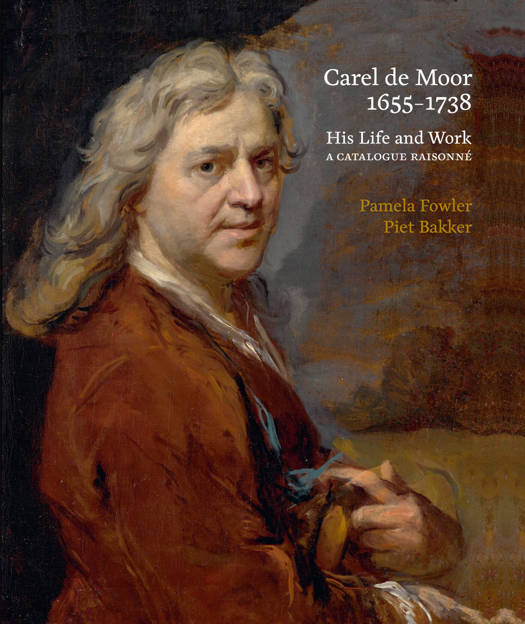
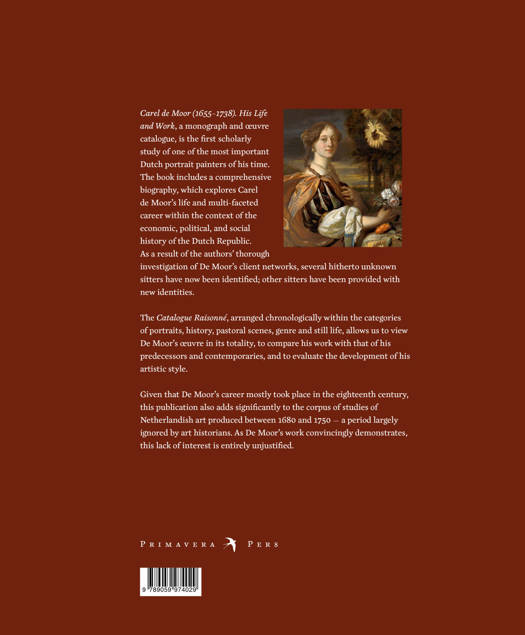
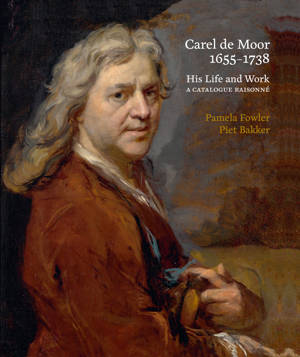
Carel de Moor (1655–1738). His Life and Work, a monograph and œuvre catalogue, is the first scholarly study of one of the most important Dutch portrait painters of his time. The book includes a comprehensive biography, which explores Carel de Moor’s life and multi-faceted career within the context of the economic, political, and social history of the Dutch Republic.
As a result of the authors’ thorough investigation of De Moor’s client networks, several hitherto unknown sitters have now been identified; other sitters have been provided with new identities.
The Catalogue Raisonné, arranged chronologically within the categories of portraits, history, pastoral scenes, genre and still life, allows us to view De Moor’s œuvre in its totality, to compare his work with that of his predecessors and contemporaries, and to evaluate the development of his artistic style.
Given that De Moor’s career mostly took place in the eighteenth century, this publication also adds significantly to the corpus of studies of Netherlandish art produced between 1680 and 1750 — a period largely ignored by art historians. As De Moor’s work convincingly demonstrates, this lack of interest is entirely unjustified
As a result of the authors’ thorough investigation of De Moor’s client networks, several hitherto unknown sitters have now been identified; other sitters have been provided with new identities.
The Catalogue Raisonné, arranged chronologically within the categories of portraits, history, pastoral scenes, genre and still life, allows us to view De Moor’s œuvre in its totality, to compare his work with that of his predecessors and contemporaries, and to evaluate the development of his artistic style.
Given that De Moor’s career mostly took place in the eighteenth century, this publication also adds significantly to the corpus of studies of Netherlandish art produced between 1680 and 1750 — a period largely ignored by art historians. As De Moor’s work convincingly demonstrates, this lack of interest is entirely unjustified
Specificaties
Betrokkenen
- Auteur(s):
- Uitgeverij:
Inhoud
- Aantal bladzijden:
- 400
- Taal:
- Nederlands
Eigenschappen
- Productcode (EAN):
- 9789059973930
- Verschijningsdatum:
- 29/02/2024
- Uitvoering:
- Hardcover
- Afmetingen:
- 253 mm x 294 mm
- Gewicht:
- 2015 g


Alleen bij Standaard Boekhandel
+ 178 punten op je klantenkaart van Standaard Boekhandel
CADEAU


Beoordelingen
We publiceren alleen reviews die voldoen aan de voorwaarden voor reviews. Bekijk onze voorwaarden voor reviews.