



- Afhalen na 1 uur in een winkel met voorraad
- In januari gratis thuislevering in België
- Ruim aanbod met 7 miljoen producten
- Afhalen na 1 uur in een winkel met voorraad
- In januari gratis thuislevering in België
- Ruim aanbod met 7 miljoen producten





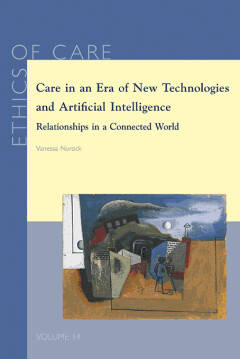
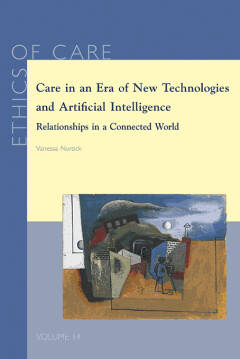
Care in an Era of New Technologies and Artificial Intelligence
Relationships in a Connected World
V Nurock
€ 55,00
+ 110 punten
Omschrijving
Modern civilization has been undergoing a major technological revolution accelerated by artificial intelligence. This revolution has ethical and political dimensions that make it similar in scope to the Enlightenment, yet potentially contrary in values. Blurring traditional binary oppositions such as 'natural' vs. 'artificial, ' it opens up a horizon of unpredictability that threatens to compromise our capacity to manage risk and our desire for control. As we face this challenge, the task of philosophical ethics is to articulate an ethics of care and of heightened sensitivity to human relations that is commensurate with the needs of a hyperconnected world. This book seeks to go beyond the fruitless divide between obtuse resistance vs. managerial technosolutionism to address serious theoretical and practical issues, asking what we should reasonably expect from the new technologies and artificial intelligence and how we can design them ethically so that we can uphold the Enlightenment injunction: "Dare to think!"
Specificaties
Betrokkenen
- Auteur(s):
- Uitgeverij:
Inhoud
- Aantal bladzijden:
- 313
- Taal:
- Engels
- Reeks:
- Reeksnummer:
- nr. 14
Eigenschappen
- Productcode (EAN):
- 9789042952010
- Verschijningsdatum:
- 8/04/2025
- Uitvoering:
- Paperback
- Formaat:
- Trade paperback (VS)
- Afmetingen:
- 16 cm x 24 cm
- Gewicht:
- 476 g


Alleen bij Standaard Boekhandel
+ 110 punten op je klantenkaart van Standaard Boekhandel
Cadeau

AANGERADEN


Beoordelingen
We publiceren alleen reviews die voldoen aan de voorwaarden voor reviews. Bekijk onze voorwaarden voor reviews.