


- Afhalen na 1 uur in een winkel met voorraad
- Gratis thuislevering in België vanaf € 30
- Ruim aanbod met 7 miljoen producten
- Afhalen na 1 uur in een winkel met voorraad
- Gratis thuislevering in België vanaf € 30
- Ruim aanbod met 7 miljoen producten




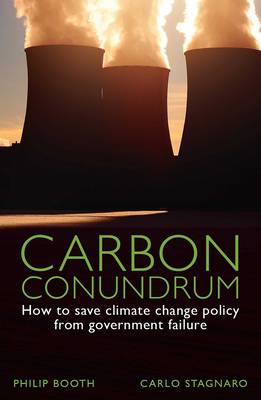
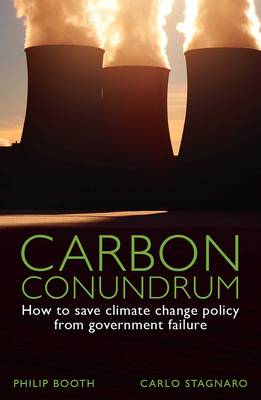
Carbon Conundrum
How to Save Climate Change Policy from Government Failure
Philip Booth, Carlo Stagnaro
Paperback | Engels
€ 27,45
+ 54 punten
Omschrijving
Politicians around the world have signed up to achieving carbon net zero by 2050. And several countries, including the UK and those in the EU, have struck a 'new green deal'. This puts environmental taxes and subsidies at the heart of energy policy. But it's created an immensely complex and costly merry-go-round in which even fossil fuels end up being subsidised. This chaotic system, say authors Philip Booth and Carlo Stagnaro, is wide open to regulatory capture - and to an ideologically motivated agenda. It is also less resilient to crises in energy supply, such as the one caused by Russia's invasion of Ukraine in early 2022. In Carbon Conundrum they illustrate the incoherence, iniquities and inefficiency of this large-scale government intervention. And they warn that 'climate change is too important a challenge to be approached in this way'. Instead, they argue for a rational 'polluter pays' system of taxing energy sources. This, they contend, would give individuals and businesses much more control over how they reduce carbon emissions. And it would stimulate greater levels of carbon reduction - at a much lower economic cost.
Specificaties
Betrokkenen
- Auteur(s):
- Uitgeverij:
Inhoud
- Aantal bladzijden:
- 136
- Taal:
- Engels
Eigenschappen
- Productcode (EAN):
- 9780255368124
- Verschijningsdatum:
- 15/08/2022
- Uitvoering:
- Paperback
- Formaat:
- Trade paperback (VS)
- Afmetingen:
- 128 mm x 196 mm
- Gewicht:
- 158 g


Alleen bij Standaard Boekhandel
+ 54 punten op je klantenkaart van Standaard Boekhandel
Cadeau

AANGERADEN


Beoordelingen
We publiceren alleen reviews die voldoen aan de voorwaarden voor reviews. Bekijk onze voorwaarden voor reviews.