


- Afhalen na 1 uur in een winkel met voorraad
- Gratis thuislevering in België vanaf € 30
- Ruim aanbod met 7 miljoen producten
- Afhalen na 1 uur in een winkel met voorraad
- Gratis thuislevering in België vanaf € 30
- Ruim aanbod met 7 miljoen producten





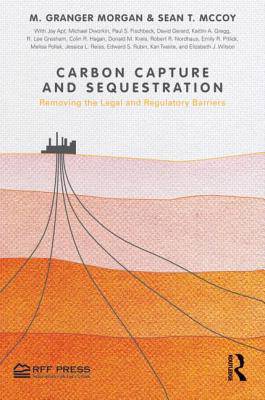
Carbon Capture and Sequestration
Removing the Legal and Regulatory Barriers
M Granger Morgan, Sean T McCoy
Hardcover | Engels
€ 290,45
+ 580 punten
Omschrijving
The United States produces over seventy per cent of all its electricity from fossil fuels and nearly fifty per cent from coal alone. Worldwide, forty-one per cent of all electricity is generated from coal, making it the single most important fuel source for electricity generation, followed by natural gas. This means that an essential part of any portfolio for greenhouse gas emissions reductions will be technology to capture carbon dioxide and permanently sequester it in suitable geologic formations. While many nations have created incentives to develop of CCS technology, large regulatory and legal barriers exist that must still be addressed. This book identifies current law and regulation that applies to geologic sequestration in the U.S., the regulatory needs to ensure that geologic sequestration is carried out safely and effectively, and barriers that current law and regulation present to timely deployment of CCS. The authors find the three most significant barriers to be: an ill-defined process to access pore space in deep saline formations; a piecemeal, procedural and static permitting system; and the lack of a clear, responsible plan to address long-term liability associated with sequestered CO2. The book provides legislative options to remove these barriers and address the regulatory needs, and makes recommendations on the best options to encourage safe, effective deployment of CCS. The authors propose recommendations in legislative language, which is of particular use to policy makers faced with the challenge of addressing climate change and energy
Specificaties
Betrokkenen
- Auteur(s):
- Uitgeverij:
Inhoud
- Aantal bladzijden:
- 304
- Taal:
- Engels
Eigenschappen
- Productcode (EAN):
- 9781617261015
- Verschijningsdatum:
- 21/06/2012
- Uitvoering:
- Hardcover
- Formaat:
- Genaaid
- Afmetingen:
- 152 mm x 236 mm
- Gewicht:
- 635 g


Alleen bij Standaard Boekhandel
+ 580 punten op je klantenkaart van Standaard Boekhandel
Cadeau

AANGERADEN


Beoordelingen
We publiceren alleen reviews die voldoen aan de voorwaarden voor reviews. Bekijk onze voorwaarden voor reviews.