


- Afhalen na 1 uur in een winkel met voorraad
- Gratis thuislevering in België vanaf € 30
- Ruim aanbod met 7 miljoen producten
- Afhalen na 1 uur in een winkel met voorraad
- Gratis thuislevering in België vanaf € 30
- Ruim aanbod met 7 miljoen producten





€ 41,95
+ 83 punten
Omschrijving
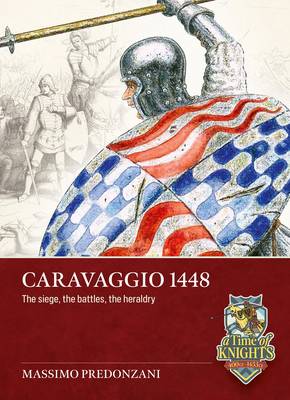
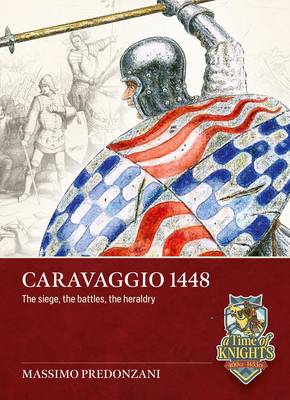
Caravaggio 1448 examines Francesco Sforza's victory over the Venetian army at Caravaggio in September 1448, a crucial moment in the condottiero's political and military rise. Indeed, this battle would pave the way for his entry into Milan in March 1450 and his installation as duke.
On 13 August 1447, Duke Filippo Maria Visconti, the last member of the illustrious Milanese family, died in Milan. With no male heirs, the government of the duchy was immediately taken over by the citizens of Milan, who declared the Ambrosian Republic. However, not all cities within the former duchy joined the republic; moreover, Venice, seizing the opportunity, attacked the duchy with an army commanded by the condottiero Micheletto Attendolo. The Milanese then had to turn to the services of the condottiero Francesco Sforza, who in 1441 had married Filippo Maria's only daughter. Sforza gradually regained the territories lost by the Milanese, overcoming the Venetian army several times and ultimately defeating it at Caravaggio in September 1448.
After reaching an agreement with Venice, the condottiero turned his sights on Milan, and he entered the city on 22 March 1450, proclaiming himself duke. Caravaggio 1448 analyses the political situation in Italy in the mid-1400s and the military actions that led to the Sforza victory. Particular attention is paid to the siege of Caravaggio by Milanese troops, which lasted from July to September 1448, with numerous clashes between Sforza's army and Micheletto Attendolo's Venetians, culminating in the final battle. Caravaggio 1448 explores Italian military strategy of the time, the mercenary companies, the tactical unit of the 'lance' of heavy cavalry, and the various weapons and functions of the infantry. Finally, military heraldry is studied in detail, given that Italian armies consisted almost exclusively of mercenaries, who displayed their own liveries on clothing, harnesses, insignia, and so on.
On 13 August 1447, Duke Filippo Maria Visconti, the last member of the illustrious Milanese family, died in Milan. With no male heirs, the government of the duchy was immediately taken over by the citizens of Milan, who declared the Ambrosian Republic. However, not all cities within the former duchy joined the republic; moreover, Venice, seizing the opportunity, attacked the duchy with an army commanded by the condottiero Micheletto Attendolo. The Milanese then had to turn to the services of the condottiero Francesco Sforza, who in 1441 had married Filippo Maria's only daughter. Sforza gradually regained the territories lost by the Milanese, overcoming the Venetian army several times and ultimately defeating it at Caravaggio in September 1448.
After reaching an agreement with Venice, the condottiero turned his sights on Milan, and he entered the city on 22 March 1450, proclaiming himself duke. Caravaggio 1448 analyses the political situation in Italy in the mid-1400s and the military actions that led to the Sforza victory. Particular attention is paid to the siege of Caravaggio by Milanese troops, which lasted from July to September 1448, with numerous clashes between Sforza's army and Micheletto Attendolo's Venetians, culminating in the final battle. Caravaggio 1448 explores Italian military strategy of the time, the mercenary companies, the tactical unit of the 'lance' of heavy cavalry, and the various weapons and functions of the infantry. Finally, military heraldry is studied in detail, given that Italian armies consisted almost exclusively of mercenaries, who displayed their own liveries on clothing, harnesses, insignia, and so on.
Specificaties
Betrokkenen
- Auteur(s):
- Uitgeverij:
Inhoud
- Aantal bladzijden:
- 192
- Taal:
- Engels
- Reeks:
Eigenschappen
- Productcode (EAN):
- 9781806722655
- Verschijningsdatum:
- 15/01/2027
- Uitvoering:
- Paperback
- Formaat:
- Trade paperback (VS)
- Afmetingen:
- 180 mm x 249 mm


Alleen bij Standaard Boekhandel
+ 83 punten op je klantenkaart van Standaard Boekhandel
Cadeau

AANGERADEN


Beoordelingen
We publiceren alleen reviews die voldoen aan de voorwaarden voor reviews. Bekijk onze voorwaarden voor reviews.