


- Afhalen na 1 uur in een winkel met voorraad
- Gratis thuislevering in België vanaf € 30
- Ruim aanbod met 7 miljoen producten
- Afhalen na 1 uur in een winkel met voorraad
- Gratis thuislevering in België vanaf € 30
- Ruim aanbod met 7 miljoen producten





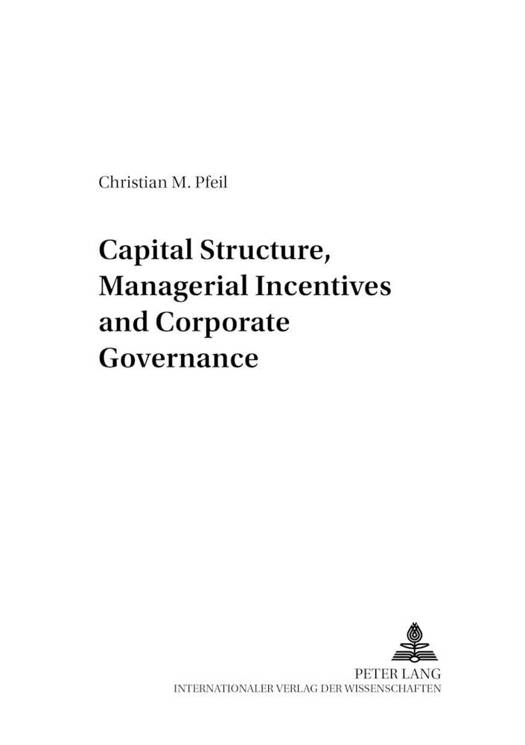
Capital Structure, Managerial Incentives and Corporate Governance
Christian Pfeil
€ 77,95
+ 155 punten
Omschrijving
What factors determine a firm's financing decision? Informational economics and contract theory have contributed a great deal to answer this question. This book contains three essays that further contribute to this strand of literature with the focus on theories that view capital structure as a disciplining instrument for a self-interested management. Some of the existing theories abstract from other disciplining devices such as ordinary incentive wages to justify debt as a mean to mitigate a moral hazard problem between managers and owners of a firm. Two of the models presented here turn to the question of whether debt can play a role as an incentive device when other incentive mechanisms are available as well. A third model revisits the signaling literature on capital structure in the light of new empirical evidence. All models are embedded into a corporate governance framework that allows to set the conclusions into a broader perspective.
Specificaties
Betrokkenen
- Auteur(s):
- Uitgeverij:
Inhoud
- Aantal bladzijden:
- 204
- Taal:
- Engels
- Reeks:
- Reeksnummer:
- nr. 9
Eigenschappen
- Productcode (EAN):
- 9783631385746
- Verschijningsdatum:
- 11/04/2002
- Uitvoering:
- Paperback
- Formaat:
- Trade paperback (VS)
- Afmetingen:
- 148 mm x 210 mm
- Gewicht:
- 279 g


Alleen bij Standaard Boekhandel
+ 155 punten op je klantenkaart van Standaard Boekhandel
CADEAU

AANGERADEN


Beoordelingen
We publiceren alleen reviews die voldoen aan de voorwaarden voor reviews. Bekijk onze voorwaarden voor reviews.