


- Afhalen na 1 uur in een winkel met voorraad
- Gratis thuislevering in België vanaf € 30
- Ruim aanbod met 7 miljoen producten
- Afhalen na 1 uur in een winkel met voorraad
- Gratis thuislevering in België vanaf € 30
- Ruim aanbod met 7 miljoen producten





€ 52,95
+ 105 punten
Omschrijving
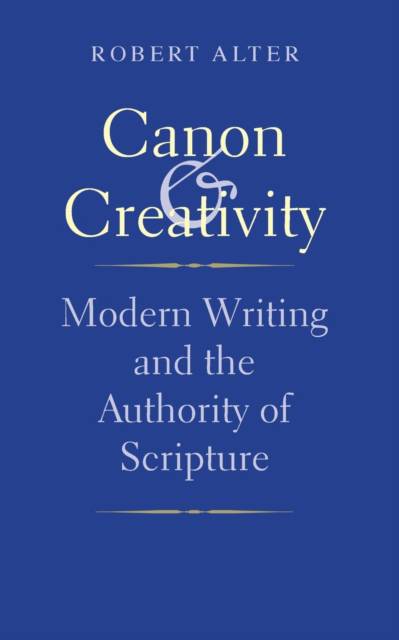
In this illuminating book, one of our foremost literary critics views the much-debated question of the literary canon from an entirely new angle. Robert Alter explores the ways in which a range of iconoclastic twentieth-century authors have put to use the stories, language, and imagery of the paramount canonical text-the Hebrew Bible. Alter makes a compelling case against the prevalent, pejorative notion of the canon as a vehicle of ideological enforcement. He shows instead that canons by nature are surprisingly elastic, providing later writers with imaginative resources even when those same writers rebel against what they conceive as the constraints of the canon. Focusing special attention on Franz Kafka's Amerika, Haim Nahman Bialik's The Dead of the Desert, and James Joyce's Ulysses, Alter brings to bear an unusual perspective, putting into a single frame of discussion three writers from widely different linguistic traditions (German, Hebrew, English) and from disparate cultural settings (Prague, Odessa, Dublin). Alter's close readings of these major modern writers reveal how reference to canonical antecedents can be both surprisingly various and enabling. Examining the diverse modes in which Biblical material becomes interwoven with the fabric of a new work, he also offers new insights into the nature and range of modernism. Critically appreciative rather than polemic in tone, Alter conveys in this thoughtful book a renewed sense of the vitality of literary modernism.
Specificaties
Betrokkenen
- Auteur(s):
- Uitgeverij:
Inhoud
- Aantal bladzijden:
- 208
- Taal:
- Engels
- Reeks:
Eigenschappen
- Productcode (EAN):
- 9780300206524
- Verschijningsdatum:
- 30/09/2013
- Uitvoering:
- Paperback
- Formaat:
- Trade paperback (VS)
- Afmetingen:
- 127 mm x 203 mm
- Gewicht:
- 231 g


Alleen bij Standaard Boekhandel
+ 105 punten op je klantenkaart van Standaard Boekhandel
CADEAU

AANGERADEN


Beoordelingen
We publiceren alleen reviews die voldoen aan de voorwaarden voor reviews. Bekijk onze voorwaarden voor reviews.