


- Afhalen na 1 uur in een winkel met voorraad
- Gratis thuislevering in België vanaf € 30
- Ruim aanbod met 7 miljoen producten
- Afhalen na 1 uur in een winkel met voorraad
- Gratis thuislevering in België vanaf € 30
- Ruim aanbod met 7 miljoen producten





€ 177,45
+ 354 punten
Uitvoering
Omschrijving
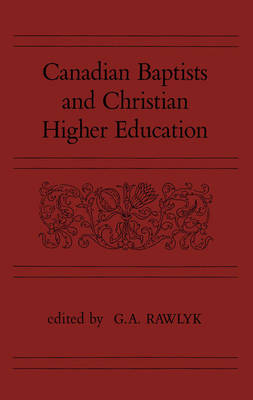
Since the late eighteenth century, Canadian Baptists have held sharply divergent views on the efficacy of higher education. For some, higher education undermines Evangelical piety; for others, it is a necessity if contemporary Baptists are to contend effectively with modern doubts about religion. The ongoing debate concerning Christian higher education has significantly shaped the contours of the Canadian Baptist experience for almost two centuries and continues to do so even in the 1980s. Canadian Baptists and Christian Higher Education deals with this debate and its effects on three educational institutions: Acadia University, McMaster University, and Brandon College. In his chapter on Acadia, Barry Moody argues that the university has been surprisingly open to a variety of theologies and pedagogical perspectives, tracing this to the liberality and breadth of vision of Nova Scotia Baptists. His study helps explain the remarkable strength of the Baptist tradition in late nineteenth-century Nova Scotia. J.R.C. Perkin's chapter on one of Acadia's distinguished presidents, Watson Kirkonnell, shows Kirkonnell as representative of this tradition and its strength. G.A. Rawlyk examines some of the underlying forces which significantly affected the development of McMaster University. He suggests that the cutting edge of McMaster's nineteenth century Evangelicalism may have been dulled by the enthusiastic manner in which "consumerism" and "modernity" were appropriated by the Baptist Convention leadership which controlled the university. In his discussion of Brandon College, Walter Ellis argues that Brandon failed as a Baptist institution of higher learning largely because it was out of touch with Western Canadian realities. If it had been a bible college rather than a Manitoba variant of McMaster, Brandon might still be in existence and Conventional Baptists might as a result be a far stronger force in the West. These essays on individual institutions highlight the pressure on denominational universities to emphasize not only Christian spirituality but secular scholarship. They will be of interest to all those who are concerned not only with the fate of Baptist institutions but the entire Christian church in Canada.
Specificaties
Betrokkenen
- Auteur(s):
- Uitgeverij:
Inhoud
- Aantal bladzijden:
- 144
- Taal:
- Engels
Eigenschappen
- Productcode (EAN):
- 9780773506770
- Verschijningsdatum:
- 1/07/1988
- Uitvoering:
- Hardcover
- Formaat:
- Genaaid
- Afmetingen:
- 152 mm x 229 mm
- Gewicht:
- 367 g


Alleen bij Standaard Boekhandel
+ 354 punten op je klantenkaart van Standaard Boekhandel
AANGERADEN


Beoordelingen
We publiceren alleen reviews die voldoen aan de voorwaarden voor reviews. Bekijk onze voorwaarden voor reviews.