


- Afhalen na 1 uur in een winkel met voorraad
- Gratis thuislevering in België vanaf € 30
- Ruim aanbod met 7 miljoen producten
- Afhalen na 1 uur in een winkel met voorraad
- Gratis thuislevering in België vanaf € 30
- Ruim aanbod met 7 miljoen producten





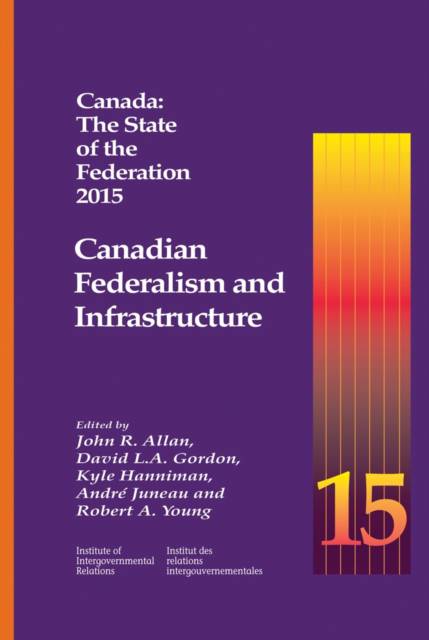
Canada: The State of the Federation 2015
Canadian Federalism and Infrastructure
€ 60,45
+ 120 punten
Omschrijving
Renewing and expanding national infrastructure is critical to the wellbeing and productivity of Canadians and is one of the foremost challenges confronting our federal, provincial and municipal governments. Not only are the required investments dauntingly large for all three levels of government, but so too is the required level of intergovernmental cooperation if our goals are to be realized. The 2015 State of the Federation volume advances our understanding of these infrastructure challenges and identifies how best to resolve them.
The contributors to the volume provide historical or international comparative perspectives and utilize legal, economic, or administrative approaches to examine the nature and magnitude of the so-called infrastructure deficit and the question of how best to finance the necessary investments. The possible roles played by deficits and debt are considered, together with options such as public-private partnerships and asset recycling, and a possible Aboriginal resource tax to finance the on-reserve infrastructure needs of First Nations. Considerable attention is also paid to pricing the use of infrastructure both to achieve efficiency in use and to avoid excess demand and an exaggerated perception of the required level of investment. Other contributors examine the infrastructure-investment-decision processes at the federal and provincial levels and consider the optimal allocation of responsibility for infrastructure investments among the different levels of government, and the related issue of the role of intergovernmental transfers to underwrite this allocation.Specificaties
Betrokkenen
- Uitgeverij:
Inhoud
- Aantal bladzijden:
- 296
- Taal:
- Engels
- Reeks:
Eigenschappen
- Productcode (EAN):
- 9781553394556
- Verschijningsdatum:
- 1/08/2018
- Uitvoering:
- Paperback
- Formaat:
- Trade paperback (VS)
- Afmetingen:
- 152 mm x 229 mm
- Gewicht:
- 453 g

Alleen bij Standaard Boekhandel
+ 120 punten op je klantenkaart van Standaard Boekhandel
Cadeau

AANGERADEN


Beoordelingen
We publiceren alleen reviews die voldoen aan de voorwaarden voor reviews. Bekijk onze voorwaarden voor reviews.