


- Afhalen na 1 uur in een winkel met voorraad
- Gratis thuislevering in België vanaf € 30
- Ruim aanbod met 7 miljoen producten
- Afhalen na 1 uur in een winkel met voorraad
- Gratis thuislevering in België vanaf € 30
- Ruim aanbod met 7 miljoen producten





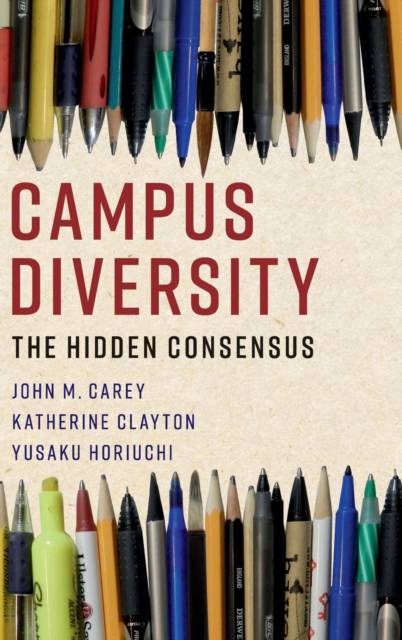
Campus Diversity
The Hidden Consensus
John M Carey, Katherine Clayton, Yusaku Horiuchi
Hardcover | Engels
€ 141,45
+ 282 punten
Uitvoering
Omschrijving
Media, politicians, and the courts portray college campuses as divided over diversity and affirmative action. But what do students and faculty really think? This book uses a novel technique to elicit honest opinions from students and faculty and measure preferences for diversity in undergraduate admissions and faculty recruitment at seven major universities, breaking out attitudes by participants' race, ethnicity, gender, socio-economic status, and political partisanship. Scholarly excellence is a top priority everywhere, but the authors show that when students consider individual candidates, they favor members of all traditionally underrepresented groups - by race, ethnicity, gender, and socio-economic background. Moreover, there is little evidence of polarization in the attitudes of different student groups. The book reveals that campus communities are less deeply divided than they are often portrayed to be; although affirmative action remains controversial in the abstract, there is broad support for prioritizing diversity in practice.
Specificaties
Betrokkenen
- Auteur(s):
- Uitgeverij:
Inhoud
- Aantal bladzijden:
- 276
- Taal:
- Engels
Eigenschappen
- Productcode (EAN):
- 9781108477956
- Verschijningsdatum:
- 19/12/2019
- Uitvoering:
- Hardcover
- Formaat:
- Genaaid
- Afmetingen:
- 152 mm x 229 mm
- Gewicht:
- 576 g


Alleen bij Standaard Boekhandel
+ 282 punten op je klantenkaart van Standaard Boekhandel
Cadeau

AANGERADEN


Beoordelingen
We publiceren alleen reviews die voldoen aan de voorwaarden voor reviews. Bekijk onze voorwaarden voor reviews.