


- Afhalen na 1 uur in een winkel met voorraad
- Gratis thuislevering in België vanaf € 30
- Ruim aanbod met 7 miljoen producten
- Afhalen na 1 uur in een winkel met voorraad
- Gratis thuislevering in België vanaf € 30
- Ruim aanbod met 7 miljoen producten





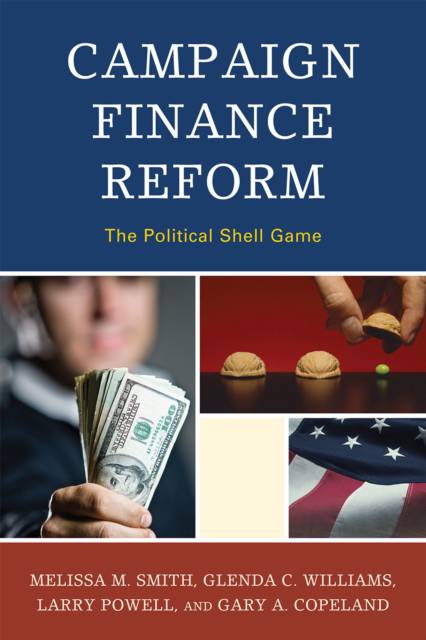
Campaign Finance Reform
The Political Shell Game
Melissa M Smith, Glenda C Williams, Larry Powell, Gary a Copeland
€ 98,45
+ 196 punten
Uitvoering
Omschrijving
For decades, campaign finance reform has been an on-going topic of discussion. In particular, the Bipartisan Campaign Reform Act of 2002 (BCRA) was heralded as a major breakthrough in controlling the flow of money into campaigns. Almost immediately, political players found other ways to financially manipulate the new laws. Campaign Finance Reform: The Political Shell Game provides an in-depth look at the history of political campaign finance reform with special emphasis on legislative, FEC, and federal court actions from the 1970s to present. In particular, the authors examine the ways that campaigns and independent groups have sought to make end-runs around existing campaign finance rules. Oftentimes the loopholes they find make a significant impact on an election, sparking the next round of campaign finance reform. New rules are then enacted, and new loopholes are found. Like a big political shell game, the amount of money in politics never actually decreases, but instead gets moved around from one organization to another.
Specificaties
Betrokkenen
- Auteur(s):
- Uitgeverij:
Inhoud
- Aantal bladzijden:
- 164
- Taal:
- Engels
- Reeks:
Eigenschappen
- Productcode (EAN):
- 9780739145661
- Verschijningsdatum:
- 2/06/2010
- Uitvoering:
- Paperback
- Formaat:
- Trade paperback (VS)
- Afmetingen:
- 190 mm x 230 mm
- Gewicht:
- 258 g


Alleen bij Standaard Boekhandel
+ 196 punten op je klantenkaart van Standaard Boekhandel
Cadeau

AANGERADEN


Beoordelingen
We publiceren alleen reviews die voldoen aan de voorwaarden voor reviews. Bekijk onze voorwaarden voor reviews.