


- Afhalen na 1 uur in een winkel met voorraad
- Gratis thuislevering in België vanaf € 30
- Ruim aanbod met 7 miljoen producten
- Afhalen na 1 uur in een winkel met voorraad
- Gratis thuislevering in België vanaf € 30
- Ruim aanbod met 7 miljoen producten





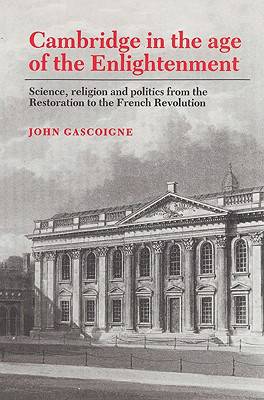
Cambridge in the Age of the Enlightenment
Science, Religion and Politics from the Restoration to the French Revolution
John Gascoigne
Paperback | Engels
€ 76,45
+ 152 punten
Omschrijving
This book attempts to defend the use of the term 'English Enlightenment' by using late seventeenth- and eighteenth-century Cambridge as an illustration of the widespread diffusion of some of the chief characteristics of the Enlightenment within the Church of England and the English 'Establishment' more generally. It also seeks to provide a social context for the dissemination of such ideas by indicating how the political and ecclesiastical consequences of such events as the Restoration, the Glorious Revolution and the French Revolution helped either to facilitate or to impede that linkage between Anglicanism and science which is sometimes referred to as 'the holy alliance'. In summary, the book argues that in the period 1660-88 there was little political or ecclesiastical encouragement for such an alliance while the period 1688-1760 was, by contrast, its heyday.
Specificaties
Betrokkenen
- Auteur(s):
- Uitgeverij:
Inhoud
- Aantal bladzijden:
- 372
- Taal:
- Engels
Eigenschappen
- Productcode (EAN):
- 9780521524971
- Verschijningsdatum:
- 18/07/2002
- Uitvoering:
- Paperback
- Formaat:
- Trade paperback (VS)
- Afmetingen:
- 155 mm x 234 mm
- Gewicht:
- 576 g


Alleen bij Standaard Boekhandel
+ 152 punten op je klantenkaart van Standaard Boekhandel
Cadeau

AANGERADEN


Beoordelingen
We publiceren alleen reviews die voldoen aan de voorwaarden voor reviews. Bekijk onze voorwaarden voor reviews.