


- Afhalen na 1 uur in een winkel met voorraad
- Gratis thuislevering in België vanaf € 30
- Ruim aanbod met 7 miljoen producten
- Afhalen na 1 uur in een winkel met voorraad
- Gratis thuislevering in België vanaf € 30
- Ruim aanbod met 7 miljoen producten





€ 137,45
+ 274 punten
Omschrijving
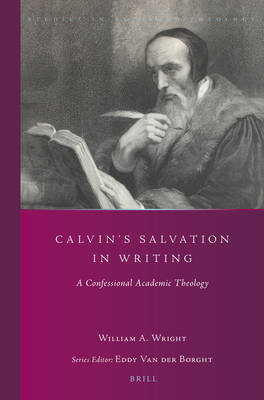
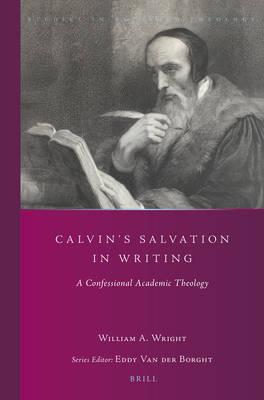
Academic writing is not a neutral medium for conveying truth; its powers and faults must be exposed before theology entrusts its mysteries to the academic text. To that end, William Wright, en route to putting Calvin's Salvation in Writing, institutes a new theological genre, "theography" theology that "confesses" its academic parameters--with both gratitude and repentance. He delineates those parameters by contrasting the philosophical rationales for writing found in Hegel and Derrida. Drawing on their insights into dialectic and difference, Wright sets out Calvin's doctrine of justification and sanctification across a shifting written terrain. Observing Calvin's doctrinal structure thus becomes a path to save academic writing from claiming for itself either too much or too little.
Calvin's Salvation in Writing: A Confessional Academic Theology is the philosophically boldest employment of Calvin to date. Through innovatively mining Calvin's theology, William Wright designs a new method of theology that will enliven the field.
Calvin's Salvation in Writing: A Confessional Academic Theology is the philosophically boldest employment of Calvin to date. Through innovatively mining Calvin's theology, William Wright designs a new method of theology that will enliven the field.
Specificaties
Betrokkenen
- Auteur(s):
- Uitgeverij:
Inhoud
- Aantal bladzijden:
- 346
- Taal:
- Engels
- Reeks:
- Reeksnummer:
- nr. 29
Eigenschappen
- Productcode (EAN):
- 9789004292239
- Verschijningsdatum:
- 9/04/2015
- Uitvoering:
- Paperback
- Formaat:
- Trade paperback (VS)
- Afmetingen:
- 155 mm x 231 mm
- Gewicht:
- 521 g


Alleen bij Standaard Boekhandel
+ 274 punten op je klantenkaart van Standaard Boekhandel
Cadeau

AANGERADEN


Beoordelingen
We publiceren alleen reviews die voldoen aan de voorwaarden voor reviews. Bekijk onze voorwaarden voor reviews.