


- Afhalen na 1 uur in een winkel met voorraad
- Gratis thuislevering in België vanaf € 30
- Ruim aanbod met 7 miljoen producten
- Afhalen na 1 uur in een winkel met voorraad
- Gratis thuislevering in België vanaf € 30
- Ruim aanbod met 7 miljoen producten





€ 110,45
+ 220 punten
Omschrijving
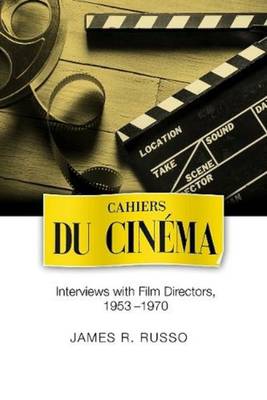
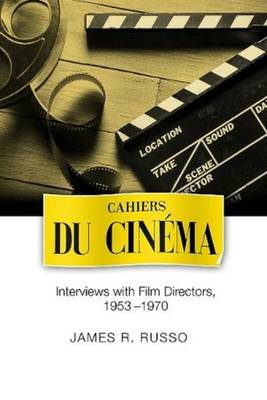
Cahiers du Cinema: Interviews with Film Directors, 19531970 brings together eighteen directorsOtto Preminger, Roberto Rossellini, John Ford, Howard Hawks, Max Ophuls, Nicholas Ray, Orson Welles, Fritz Lang, Alain Resnais, Jean-Luc Godard, Francois Truffaut, Michelangelo Antonioni, Carl-Theodor Dreyer, Federico Fellini, Robert Bresson, Joseph L. Mankiewicz, Jean Renoir, and Eric Rohmer -- who are among the leading auteurs in the history of the cinema. The interviews were all commissioned for the legendary movie journal Cahiers du Cinema (the oldest such French-language magazine in continuous publication), the first critical enterprise to treat films, particularly Hollywood films, as a serious art form. Co-founded in 1951 by Andre Bazin, Jacques Doniol-Valcroze, and Joseph-Marie Lo Duca, Cahiers was edited, after 1957, by Rohmer himself, including among its writers (and interviewers) Jacques Rivette, Godard, Claude Chabrol, and Truffaut -- all of whom went on to become highly influential filmmakers. Conducted in Cahiers famously in-depth, critical and engaged style, the interviews in this volume catch each director at a crucial juncture in his development as an artist, and stand as a historical record of the dominance of the Euro-American tradition in cinematic art. This is the first such collection of its kind in English, edited with a contextualizing introduction, critical biographies, career filmographies, and a comprehensive index by the American scholar James R. Russo.
Specificaties
Betrokkenen
- Auteur(s):
- Uitgeverij:
Inhoud
- Aantal bladzijden:
- 272
- Taal:
- Engels
Eigenschappen
- Productcode (EAN):
- 9781789762013
- Verschijningsdatum:
- 1/05/2023
- Uitvoering:
- Paperback
- Formaat:
- Trade paperback (VS)
- Afmetingen:
- 147 mm x 218 mm
- Gewicht:
- 476 g


Alleen bij Standaard Boekhandel
+ 220 punten op je klantenkaart van Standaard Boekhandel
Cadeau

AANGERADEN


Beoordelingen
We publiceren alleen reviews die voldoen aan de voorwaarden voor reviews. Bekijk onze voorwaarden voor reviews.