


- Afhalen na 1 uur in een winkel met voorraad
- Gratis thuislevering in België vanaf € 30
- Ruim aanbod met 7 miljoen producten
- Afhalen na 1 uur in een winkel met voorraad
- Gratis thuislevering in België vanaf € 30
- Ruim aanbod met 7 miljoen producten





€ 101,95
+ 203 punten
Omschrijving
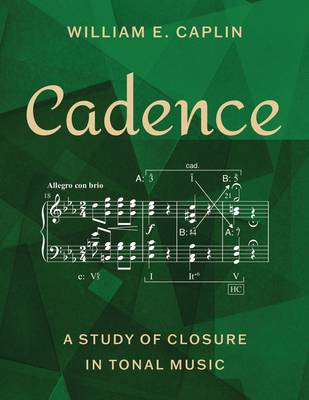
Cadence is a comprehensive examination of how formal units in European art music of the tonal era achieve closure. The book brings together the author's decades-long investigations into cadence, a compositional device that is readily experienced both by musicians and non-musicians, but one that has proven intractable to clear and precise theoretical formulation. Rooted in Caplin's broader theory of formal functions, the book first develops concepts of cadence for music of the high classical style and then extends these ideas to gauge cadential practice in earlier and later style periods. Throughout the study, various manifestations of cadence are defined in terms of their morphology (their harmonic and melodic profiles) as well as their function (the specific formal contexts in which they are deployed).
Cadence introduces a host of theoretical concepts illustrated by copious musical examples, all of which contain extensive analytical annotations of harmony, melody and form. Though the book is addressed primarily to music theorists, the many issues of compositional practice raised in this study will resonate with the interests of composers, historians, and performers alike.
Cadence introduces a host of theoretical concepts illustrated by copious musical examples, all of which contain extensive analytical annotations of harmony, melody and form. Though the book is addressed primarily to music theorists, the many issues of compositional practice raised in this study will resonate with the interests of composers, historians, and performers alike.
Specificaties
Betrokkenen
- Auteur(s):
- Uitgeverij:
Inhoud
- Aantal bladzijden:
- 646
- Taal:
- Engels
Eigenschappen
- Productcode (EAN):
- 9780197782163
- Verschijningsdatum:
- 4/10/2024
- Uitvoering:
- Paperback
- Formaat:
- Trade paperback (VS)
- Afmetingen:
- 213 mm x 269 mm
- Gewicht:
- 1474 g


Alleen bij Standaard Boekhandel
+ 203 punten op je klantenkaart van Standaard Boekhandel
Cadeau

AANGERADEN


Beoordelingen
We publiceren alleen reviews die voldoen aan de voorwaarden voor reviews. Bekijk onze voorwaarden voor reviews.