


- Afhalen na 1 uur in een winkel met voorraad
- Gratis thuislevering in België vanaf € 30
- Ruim aanbod met 7 miljoen producten
- Afhalen na 1 uur in een winkel met voorraad
- Gratis thuislevering in België vanaf € 30
- Ruim aanbod met 7 miljoen producten





€ 58,45
+ 116 punten
Uitvoering
Omschrijving
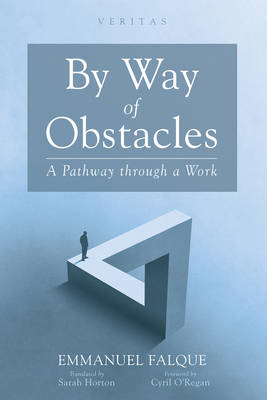
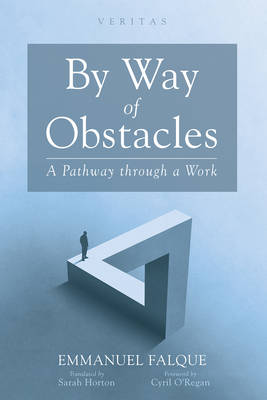
In By Way of Obstacles, Emmanuel Falque revisits the major themes of his work--finitude, the body, and the call for philosophers and theologians to "cross the Rubicon" by entering into dialogue--in light of objections that have been offered. In so doing, he offers a pathway through a work that will offer valuable insights both to newcomers to his thought and to those who are already familiar with it. For it is only after one has carved out one's pathway that one may see more clearly where one has been and where one might be going. Here readers will discover the profound relation between Falque's emphasis on the human experience of the world and his desire for philosophy and Christian theology to enter into conversation. For only by speaking within the human horizon of finitude can Christianity be credible for human beings, and it is because Christian theology teaches that God entered into our finitude that it can also teach us something of what it is to be human. Contemporary phenomenology, Falque warns, over-privileges an encounter with the infinite that cannot be originary. Calling us back to finitude, he calls us to a deeper understanding of our humanity.
Specificaties
Betrokkenen
- Auteur(s):
- Vertaler(s):
- Uitgeverij:
Inhoud
- Aantal bladzijden:
- 222
- Taal:
- Engels
- Reeks:
Eigenschappen
- Productcode (EAN):
- 9781666729689
- Verschijningsdatum:
- 6/12/2022
- Uitvoering:
- Hardcover
- Formaat:
- Genaaid
- Afmetingen:
- 152 mm x 229 mm
- Gewicht:
- 494 g


Alleen bij Standaard Boekhandel
+ 116 punten op je klantenkaart van Standaard Boekhandel
Cadeau

AANGERADEN


Beoordelingen
We publiceren alleen reviews die voldoen aan de voorwaarden voor reviews. Bekijk onze voorwaarden voor reviews.