


- Afhalen na 1 uur in een winkel met voorraad
- Gratis thuislevering in België vanaf € 30
- Ruim aanbod met 7 miljoen producten
- Afhalen na 1 uur in een winkel met voorraad
- Gratis thuislevering in België vanaf € 30
- Ruim aanbod met 7 miljoen producten





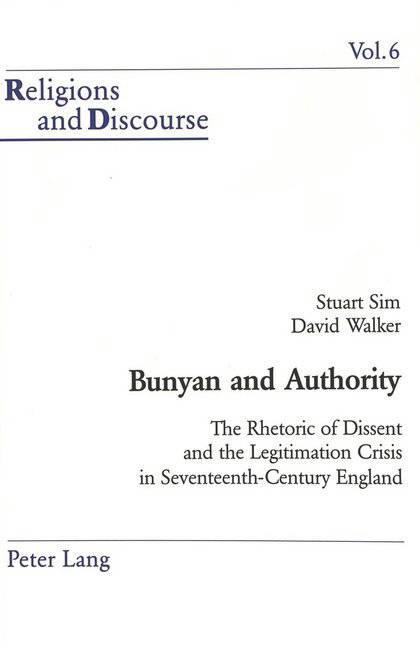
Bunyan and Authority
The Rhetoric of Dissent and the Legitimation Crisis in 17th-Century England
Stuart Sim, David Walker
€ 60,85
+ 121 punten
Omschrijving
The range of John Bunyan's work, fictional and non-fictional, is rarely captured in literary studies; nor is he often the subject of theoretically-informed readings as in the postmodern perspective adopted in this study. Jean-François Lyotard's conception of postmodernism as an attitude of 'incredulity towards grand narratives' is particularly appropriate to the situation in seventeenth-century England, where the traditional narratives of church and state collapsed in the 1640s leaving a full-scale legitimation crisis in their wake. The authors explore Bunyan's complex, and often highly subversive attitude to institutional authority, as expressed in a writing career ranging from the pamphlets of the 1650s through to the fiction of the 1670s and 80s, against a backdrop of bitter conflict between incommensurable cultural narratives. Bunyan and Authority opens up new lines of approach to an author central to the development of the nonconformist tradition in English life, and its provocative conclusions hold important implications for the study of seventeenth-century English literature, history, and religion.
Specificaties
Betrokkenen
- Auteur(s):
- Uitgeverij:
Inhoud
- Aantal bladzijden:
- 239
- Taal:
- Engels
- Reeks:
- Reeksnummer:
- nr. 6
Eigenschappen
- Productcode (EAN):
- 9783906764443
- Verschijningsdatum:
- 2/02/2000
- Uitvoering:
- Paperback
- Formaat:
- Trade paperback (VS)
- Afmetingen:
- 150 mm x 220 mm
- Gewicht:
- 349 g


Alleen bij Standaard Boekhandel
+ 121 punten op je klantenkaart van Standaard Boekhandel
Cadeau

AANGERADEN


Beoordelingen
We publiceren alleen reviews die voldoen aan de voorwaarden voor reviews. Bekijk onze voorwaarden voor reviews.