


- Afhalen na 1 uur in een winkel met voorraad
- Gratis thuislevering in België vanaf € 30
- Ruim aanbod met 7 miljoen producten
- Afhalen na 1 uur in een winkel met voorraad
- Gratis thuislevering in België vanaf € 30
- Ruim aanbod met 7 miljoen producten





€ 106,95
+ 213 punten
Uitvoering
Omschrijving
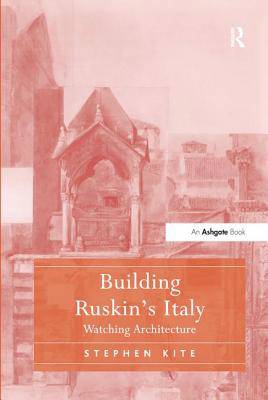
Based on extensive fieldwork, and research into John Ruskin's still little-interpreted archival material, notebooks and drawings (in the Ruskin Library, Lancaster University, UK and elsewhere), Stephen Kite offers an unprecedented account of the evolution of Ruskin's architectural thinking and observation in the context of Italy where his watching of building achieved its greatest intensity. Kite presents the complex story of Ruskin's visual thinking in architecture as a narrative of deepening interpretation and representation, focusing on the humbler monuments of Italy. He shows how Ruskin's early picturesque naturalism was transformed by the realisation that to understand the built realities confronting him in Italy demanded a closer engagement with the substance of the stones themselves; reflecting Ruskin's sense of his task as a near-archaeological gleaning and gathering of remains 'hidden in many a grass grown court, and silent pathway, and lightless canal'.
Specificaties
Betrokkenen
- Auteur(s):
- Uitgeverij:
Inhoud
- Aantal bladzijden:
- 232
- Taal:
- Engels
Eigenschappen
- Productcode (EAN):
- 9781138271456
- Verschijningsdatum:
- 28/11/2016
- Uitvoering:
- Paperback
- Formaat:
- Trade paperback (VS)
- Afmetingen:
- 155 mm x 234 mm
- Gewicht:
- 317 g


Alleen bij Standaard Boekhandel
+ 213 punten op je klantenkaart van Standaard Boekhandel
CADEAU


Beoordelingen
We publiceren alleen reviews die voldoen aan de voorwaarden voor reviews. Bekijk onze voorwaarden voor reviews.