


- Afhalen na 1 uur in een winkel met voorraad
- Gratis thuislevering in België vanaf € 30
- Ruim aanbod met 7 miljoen producten
- Afhalen na 1 uur in een winkel met voorraad
- Gratis thuislevering in België vanaf € 30
- Ruim aanbod met 7 miljoen producten





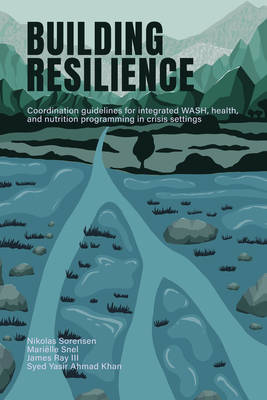
Building Resilience
Coordination Guidelines for Integrated Wash, Health, and Nutrition Programming in Crisis Settings
Nikolas Sorensen, Mariëlle Snel, James Ray III, Syed Yasir Ahmad Khan
Paperback | Engels
€ 48,45
+ 96 punten
Omschrijving
This essential handbook provides comprehensive coordination guidelines for integrating Water, Sanitation, and Hygiene (WASH) services with health and nutrition interventions during humanitarian emergencies. Addressing the critical need for enhanced multisectoral coordination, the guidelines respond to evolving global aid architecture characterized by reduced international funding and increased emphasis on government leadership and sustainable systems strengthening. Organised into seven chapters and a practitioners' toolkit, the guide is structured around four interconnected domains: stakeholder coordination, emergency WASH actions, resilience actions, and monitoring and evaluation. Four core coordination guidelines address WASH integration with health and nutrition at both national and community levels, providing step-by-step frameworks for effective emergency response. The approach emphasizes government leadership at all levels while supporting national and local officials, ministry staff, and public sector institutions alongside international humanitarian actors. Each guideline combines strategic framing with operational tools designed to guide assessment, planning, and implementation of WASH interventions that respond to complex crisis dynamics, including climate change, conflict, and pandemics. The methodology integrates immediate life-saving emergency actions (0-14 days) with longer-term resilience building (14-90 days), ensuring both rapid response and sustainable outcomes. Real-world case studies and practical tools demonstrate how coordination mechanisms can optimize the effectiveness, coverage, and sustainability of emergency WASH services while strategically linking them with health and nutrition outcomes. This resource serves humanitarian practitioners, government officials, and development professionals working across WASH, health, nutrition, and related sectors, providing a common platform for joint planning, implementation, and monitoring of integrated emergency interventions. Also available from Practical Action Publishing: The field manual edition - A practical, condensed companion designed for frontline use.
Specificaties
Betrokkenen
- Auteur(s):
- Uitgeverij:
Inhoud
- Aantal bladzijden:
- 270
- Taal:
- Engels
Eigenschappen
- Productcode (EAN):
- 9781788534703
- Verschijningsdatum:
- 15/04/2026
- Uitvoering:
- Paperback
- Formaat:
- Trade paperback (VS)
- Afmetingen:
- 156 mm x 234 mm
- Gewicht:
- 517 g


Alleen bij Standaard Boekhandel
+ 96 punten op je klantenkaart van Standaard Boekhandel
Cadeau

AANGERADEN


Beoordelingen
We publiceren alleen reviews die voldoen aan de voorwaarden voor reviews. Bekijk onze voorwaarden voor reviews.