


- Afhalen na 1 uur in een winkel met voorraad
- Gratis thuislevering in België vanaf € 30
- Ruim aanbod met 7 miljoen producten
- Afhalen na 1 uur in een winkel met voorraad
- Gratis thuislevering in België vanaf € 30
- Ruim aanbod met 7 miljoen producten





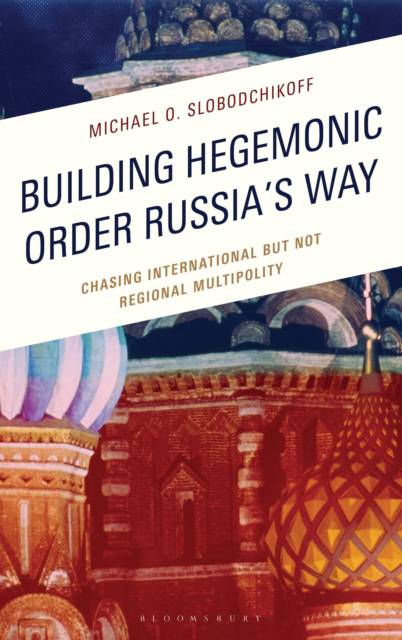
Building Hegemonic Order Russia's Way
Chasing International But Not Regional Multipolity
Michael O Slobodchikoff
€ 178,45
Uitvoering
Omschrijving
As Russia challenges the US-led Global Order, Moscow had to create its own version of regional order. From the ashes of the Soviet Union, Moscow had to rebuild its relations with each of the former Soviet states. To do so, Russia had to overcome both mistrust and power asymmetry. While some of the states have chosen not to cooperate with Russia, other states have chosen to cooperate with Russia to create a regional architecture and order. Many argue that Russia is a coercive power in the region that forces other states to act in only its own interests. While recognizing Russia's power Michael O. Slobodchikoff maintains that it is not able to simply force states to behave as it wants them to. Instead, Russia must use bilateral and multilateral cooperation for both Russia as the hegemon and the weaker powers in the region. Russia has been successful at creating regional order. While it has worked to achieve global multipolarity, it has built regional unipolarity, putting its global strategy at odds with its regional goals.
Specificaties
Betrokkenen
- Auteur(s):
- Uitgeverij:
Inhoud
- Aantal bladzijden:
- 176
- Taal:
- Engels
- Reeks:
Eigenschappen
- Productcode (EAN):
- 9781666978568
- Verschijningsdatum:
- 4/09/2025
- Uitvoering:
- Hardcover
- Formaat:
- Genaaid
- Afmetingen:
- 152 mm x 229 mm
- Gewicht:
- 403 g


Alleen bij Standaard Boekhandel
Cadeau

AANGERADEN


Beoordelingen
We publiceren alleen reviews die voldoen aan de voorwaarden voor reviews. Bekijk onze voorwaarden voor reviews.