


- Afhalen na 1 uur in een winkel met voorraad
- Gratis thuislevering in België vanaf € 30
- Ruim aanbod met 7 miljoen producten
- Afhalen na 1 uur in een winkel met voorraad
- Gratis thuislevering in België vanaf € 30
- Ruim aanbod met 7 miljoen producten





€ 48,45
Omschrijving
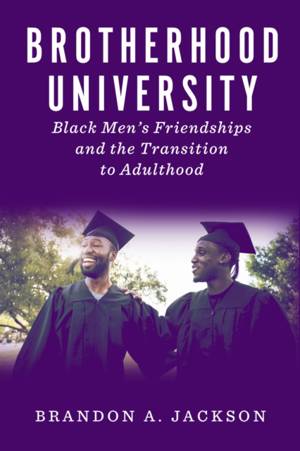
How do young Black men navigate the transition to adulthood in an era of labor market precarity, an increasing emphasis on personal independence, and gendered racism? In Brotherhood University, Brandon A. Jackson utilizes longitudinal qualitative data to examine the role of emotions and social support among a group of young Black men as they navigate a "structural double bind" as college students and into early adulthood. While prevailing stereotypes portray young Black men as emotionally aloof, Jackson finds that the men invested in an emotion culture characterized by vulnerability, loyalty, and trust, which created a system of mutual social support, or brotherhood, among the group as they navigated college, prepared for the labor market, and experienced romantic relationships. Ten years later, as they managed the early stages of their careers and considered marriage and child-rearing, the men continued to depend on the emotional vulnerability and close relationships they forged in their college years.
Specificaties
Betrokkenen
- Auteur(s):
- Uitgeverij:
Inhoud
- Aantal bladzijden:
- 230
- Taal:
- Engels
- Reeks:
Eigenschappen
- Productcode (EAN):
- 9781978821514
- Verschijningsdatum:
- 14/06/2024
- Uitvoering:
- Paperback
- Formaat:
- Trade paperback (VS)
- Afmetingen:
- 141 mm x 216 mm
- Gewicht:
- 276 g


Alleen bij Standaard Boekhandel
Cadeau

AANGERADEN


Beoordelingen
We publiceren alleen reviews die voldoen aan de voorwaarden voor reviews. Bekijk onze voorwaarden voor reviews.