


- Afhalen na 1 uur in een winkel met voorraad
- Gratis thuislevering in België vanaf € 30
- Ruim aanbod met 7 miljoen producten
- Afhalen na 1 uur in een winkel met voorraad
- Gratis thuislevering in België vanaf € 30
- Ruim aanbod met 7 miljoen producten





Omschrijving
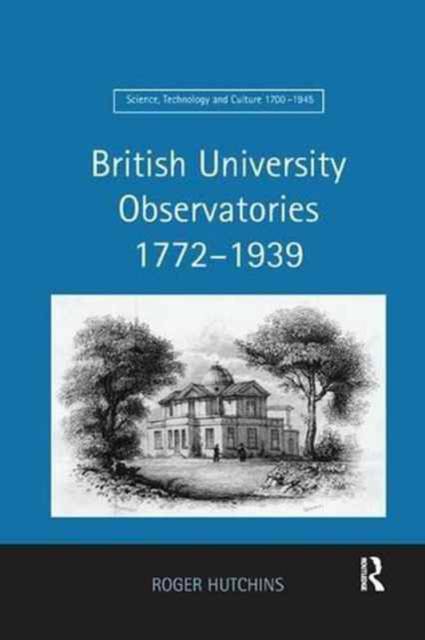
British University Observatories fills a gap in the historiography of British astronomy by offering the histories of observatories identified as a group by their shared characteristics. The first full histories of the Oxford and Cambridge observatories are here central to an explanatory history of each of the six that undertook research before World War II - Oxford, Dunsink, Cambridge, Durham, Glasgow and London. Each struggled to evolve in the middle ground between the royal observatories and those of the 'Grand Amateurs' in the nineteenth century. Fundamental issues are how and why astronomy came into the universities, how research was reconciled with teaching, lack of endowment, and response to the challenge of astrophysics. One organizing theme is the central importance of the individual professor-directors in determining the fortunes of these observatories, the community of assistants, and their role in institutional politics sometimes of the murkiest kind, patronage networks and discipline shaping coteries. The use of many primary sources illustrates personal motivations and experience. This book will intrigue anyone interested in the history of astronomy, of telescopes, of scientific institutions, and of the history of universities. The history of each individual observatory can easily be followed from foundation to 1939, or compared to experience elsewhere across the period. Astronomy is competitive and international, and the British experience is contextualised by comparison for the first time to those in Germany, France, Italy and the USA.
Specificaties
Betrokkenen
- Auteur(s):
- Uitgeverij:
Inhoud
- Aantal bladzijden:
- 568
- Taal:
- Engels
- Reeks:
Eigenschappen
- Productcode (EAN):
- 9781138264205
- Verschijningsdatum:
- 15/11/2016
- Uitvoering:
- Paperback
- Formaat:
- Trade paperback (VS)
- Afmetingen:
- 156 mm x 234 mm
- Gewicht:
- 784 g


Alleen bij Standaard Boekhandel
+ 244 punten op je klantenkaart van Standaard Boekhandel
Cadeau

AANGERADEN


Beoordelingen
We publiceren alleen reviews die voldoen aan de voorwaarden voor reviews. Bekijk onze voorwaarden voor reviews.