



Je cadeautjes zeker op tijd in huis hebben voor de feestdagen? Kom langs in onze winkels en vind het perfecte geschenk!
- Afhalen na 1 uur in een winkel met voorraad
- Gratis thuislevering in België vanaf € 30
- Ruim aanbod met 7 miljoen producten
Je cadeautjes zeker op tijd in huis hebben voor de feestdagen? Kom langs in onze winkels en vind het perfecte geschenk!
- Afhalen na 1 uur in een winkel met voorraad
- Gratis thuislevering in België vanaf € 30
- Ruim aanbod met 7 miljoen producten





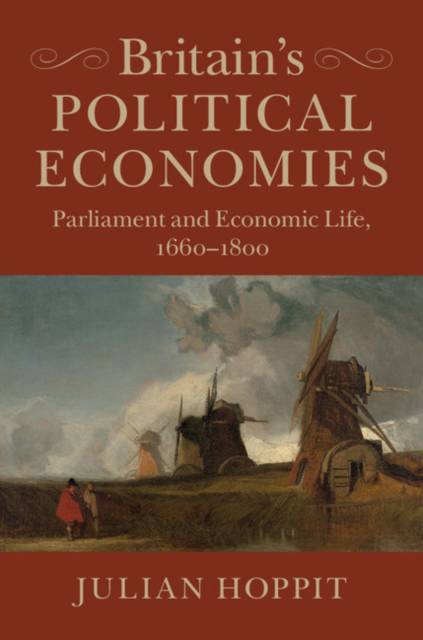
Britain's Political Economies
Parliament and Economic Life, 1660-1800
Julian Hoppit
Paperback | Engels
€ 56,45
+ 112 punten
Uitvoering
Omschrijving
The Glorious Revolution of 1688-9 transformed the role of parliament in Britain and its empire. Large numbers of statutes resulted, with most concerning economic activity. Julian Hoppit here provides the first comprehensive account of these acts, revealing how government affected economic life in this critical period prior to the Industrial Revolution, and how economic interests across Britain used legislative authority for their own benefit. Through a series of case studies, he shows how ideas, interests, and information influenced statutory action in practice. Existing frameworks such as 'mercantilism' and the 'fiscal-military state' fail to capture the full richness and structural limitations of how political power influenced Britain's precocious economic development in the period. Instead, finely grained statutory action was the norm, guided more by present needs than any grand plan, with regulatory ambitions constrained by administrative limitations, and some parts of Britain benefiting much more than others.
Specificaties
Betrokkenen
- Auteur(s):
- Uitgeverij:
Inhoud
- Aantal bladzijden:
- 410
- Taal:
- Engels
Eigenschappen
- Productcode (EAN):
- 9781316649909
- Verschijningsdatum:
- 3/05/2017
- Uitvoering:
- Paperback
- Formaat:
- Trade paperback (VS)
- Afmetingen:
- 159 mm x 236 mm
- Gewicht:
- 571 g



Alleen bij Standaard Boekhandel
+ 112 punten op je klantenkaart van Standaard Boekhandel
CADEAU


Beoordelingen
We publiceren alleen reviews die voldoen aan de voorwaarden voor reviews. Bekijk onze voorwaarden voor reviews.