


- Afhalen na 1 uur in een winkel met voorraad
- Gratis thuislevering in België vanaf € 30
- Ruim aanbod met 7 miljoen producten
- Afhalen na 1 uur in een winkel met voorraad
- Gratis thuislevering in België vanaf € 30
- Ruim aanbod met 7 miljoen producten





Omschrijving
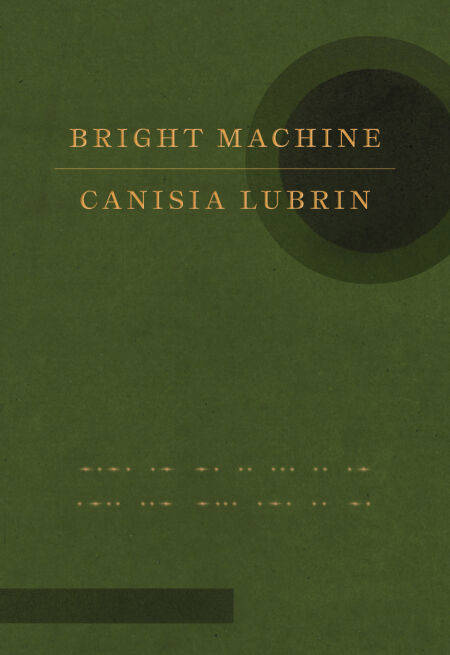
From critically acclaimed and internationally celebrated poet Canisia Lubrin comes her highly anticipated new collection, Bright Machine.
This profoundly engaged, boldly formed long suite poem probes the legacy of human intelligence put in service of ruin. The rhythm of Morse Code drives the poem’s haunting music as Lubrin records the effects of warcraft on times of peril and possibility for human cohabitation. The result is a book of chimeric monologues in an invented form Lubrin calls the tesseract—a poem of sixteen lines of fragmented music, shaped by the logic of the mathematical cube—four stanzas growing from the quatrain, each increased by one line until the final one-line stanza.
The poet addresses the myth of the developed world’s heirs, casualties, and its wing of weapons that guarantee(d) the successes of empires. Bright Machine reckons with the saga of civilization as the story of arms history—and its emissaries’ expansive appetites for recasting conquest and mass killing—in heartening, urgent poetry for a turbulent world.
This profoundly engaged, boldly formed long suite poem probes the legacy of human intelligence put in service of ruin. The rhythm of Morse Code drives the poem’s haunting music as Lubrin records the effects of warcraft on times of peril and possibility for human cohabitation. The result is a book of chimeric monologues in an invented form Lubrin calls the tesseract—a poem of sixteen lines of fragmented music, shaped by the logic of the mathematical cube—four stanzas growing from the quatrain, each increased by one line until the final one-line stanza.
The poet addresses the myth of the developed world’s heirs, casualties, and its wing of weapons that guarantee(d) the successes of empires. Bright Machine reckons with the saga of civilization as the story of arms history—and its emissaries’ expansive appetites for recasting conquest and mass killing—in heartening, urgent poetry for a turbulent world.
Specificaties
Betrokkenen
- Auteur(s):
- Uitgeverij:
Inhoud
- Aantal bladzijden:
- 80
- Taal:
- Engels
Eigenschappen
- Productcode (EAN):
- 9780771019975
- Verschijningsdatum:
- 12/10/2026
- Uitvoering:
- E-book
- Beveiligd met:
- Adobe DRM
- Formaat:
- ePub


Alleen bij Standaard Boekhandel
+ 18 punten op je klantenkaart van Standaard Boekhandel
Cadeau

AANGERADEN


Beoordelingen
We publiceren alleen reviews die voldoen aan de voorwaarden voor reviews. Bekijk onze voorwaarden voor reviews.