


- Afhalen na 1 uur in een winkel met voorraad
- Gratis thuislevering in België vanaf € 30
- Ruim aanbod met 7 miljoen producten
- Afhalen na 1 uur in een winkel met voorraad
- Gratis thuislevering in België vanaf € 30
- Ruim aanbod met 7 miljoen producten





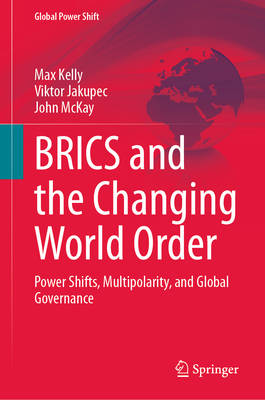
Brics and the Changing World Order
Power Shifts, Multipolarity, and Global Governance
Max Kelly, Viktor Jakupec, John McKay
€ 129,95
+ 259 punten
Eenvoudig bestellen
Veilig betalen


Gratis thuislevering vanaf € 30 (via bpost)
Gratis levering in je Standaard Boekhandel
Omschrijving
The collapse of the USSR transformed the world from a bipolar rivalry into a unipolar order dominated by the USA. Today, the rise of China and shifting global dynamics have sparked debates about unipolarity, bipolarity, and multipolarity. As the USA retreats as the principal superpower, China's dramatic ascent and the growing influence of nations like Russia, India, and the BRICS coalition signal the emergence of a complex multipolar world. This book examines the decline of the unipolar world and the outdated notion of a bipolar world, emphasizing the increasing role of the BRICS bloc of nations. Following an offensive realism approach, it explores the Global South's challenge to Western dominance, analyzing development within the context of social and environmental justice. Focusing on solidarity and alternative development models, this book discusses a new world order led by non-Western powers, reshaping global economic, political, and social landscapes.
Specificaties
Betrokkenen
- Auteur(s):
- Uitgeverij:
Inhoud
- Aantal bladzijden:
- 210
- Taal:
- Engels
- Reeks:
Eigenschappen
- Productcode (EAN):
- 9783032300294
- Verschijningsdatum:
- 10/08/2026
- Uitvoering:
- Hardcover
- Formaat:
- Genaaid
- Afmetingen:
- 155 mm x 235 mm


Alleen bij Standaard Boekhandel
+ 259 punten op je klantenkaart van Standaard Boekhandel
CADEAU

AANGERADEN


Beoordelingen
We publiceren alleen reviews die voldoen aan de voorwaarden voor reviews. Bekijk onze voorwaarden voor reviews.