


- Afhalen na 1 uur in een winkel met voorraad
- Gratis thuislevering in België vanaf € 30
- Ruim aanbod met 7 miljoen producten
- Afhalen na 1 uur in een winkel met voorraad
- Gratis thuislevering in België vanaf € 30
- Ruim aanbod met 7 miljoen producten





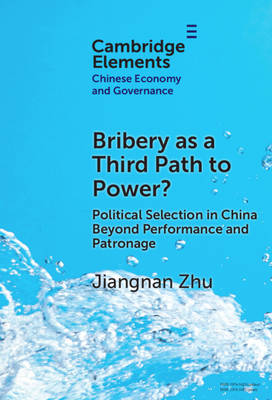
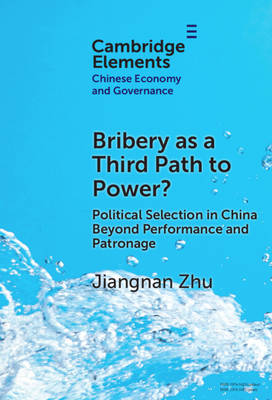
Bribery as a Third Path to Power?
Political Selection in China Beyond Performance and Patronage
Jiangnan Zhu
€ 79,45
+ 158 punten
Uitvoering
Omschrijving
While bribery has been extensively studied, the dynamics of personnel corruption in the public sector, often known as 'buying and selling of government offices, ' remain underexplored. This form of corruption involves leaders' accepting or soliciting bribes from subordinates to influence recruitment, appointment, and promotion decisions, significantly impacting political selection and governance quality. This Element employs a dual perspective - corruption and elite mobility - to analyze the distribution of office-selling across the Chinese administrative matrix and its various forms and implications. Using two novel self-compiled datasets, it proposes a tripartite framework of performance, patronage, and purchase to reimagine political selection in China, highlighting the coexistence of multiple governance models: a meritocratic state prioritizing competence, a clientelist state emphasizing loyalty, and an investment state bound by money. This title is also available as Open Access on Cambridge Core.
Specificaties
Betrokkenen
- Auteur(s):
- Uitgeverij:
Inhoud
- Aantal bladzijden:
- 75
- Taal:
- Engels
- Reeks:
Eigenschappen
- Productcode (EAN):
- 9781009471947
- Verschijningsdatum:
- 4/06/2026
- Uitvoering:
- Hardcover
- Formaat:
- Genaaid


Alleen bij Standaard Boekhandel
+ 158 punten op je klantenkaart van Standaard Boekhandel
Cadeau

AANGERADEN


Beoordelingen
We publiceren alleen reviews die voldoen aan de voorwaarden voor reviews. Bekijk onze voorwaarden voor reviews.