


- Afhalen na 1 uur in een winkel met voorraad
- Gratis thuislevering in België vanaf € 30
- Ruim aanbod met 7 miljoen producten
- Afhalen na 1 uur in een winkel met voorraad
- Gratis thuislevering in België vanaf € 30
- Ruim aanbod met 7 miljoen producten





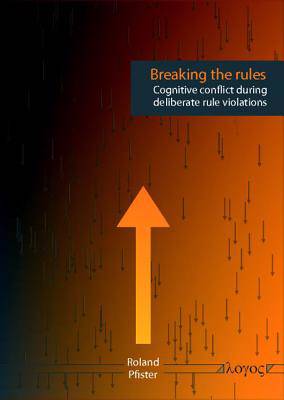
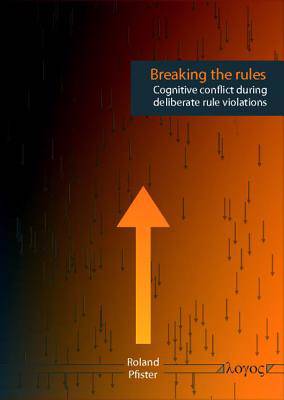
Breaking the Rules
Cognitive Conflict During Deliberate Rule Violations
Roland Pfister
Paperback | Engels
€ 93,45
+ 186 punten
Omschrijving
Violation of rules and norms is a common phenomenon in human societies. Whereas behavioural research has delineated situational and organizational determinants of rule violations, very little is known about the consequences of this behaviour right at the moment it takes place. The present experiments show that the mere fact of violating a rule leaves a fingerprint on the acting agent, indicating that rule representations cannot be suppressed easily. This holds true even when violations are neither sanctioned nor yield any other obvious consequences. These observations open a new perspective on rule violation behaviour, shifting the focus from predicting whether or not violations are likely to occur to the processes involved in actually performing the behaviour.
Specificaties
Betrokkenen
- Auteur(s):
- Uitgeverij:
Inhoud
- Aantal bladzijden:
- 179
- Taal:
- Engels
Eigenschappen
- Productcode (EAN):
- 9783832535216
- Verschijningsdatum:
- 29/10/2013
- Uitvoering:
- Paperback
- Formaat:
- Trade paperback (VS)
- Afmetingen:
- 145 mm x 211 mm
- Gewicht:
- 1305 g


Alleen bij Standaard Boekhandel
+ 186 punten op je klantenkaart van Standaard Boekhandel
Wedstrijd


Beoordelingen
We publiceren alleen reviews die voldoen aan de voorwaarden voor reviews. Bekijk onze voorwaarden voor reviews.