


- Afhalen na 1 uur in een winkel met voorraad
- Gratis thuislevering in België vanaf € 30
- Ruim aanbod met 7 miljoen producten
- Afhalen na 1 uur in een winkel met voorraad
- Gratis thuislevering in België vanaf € 30
- Ruim aanbod met 7 miljoen producten





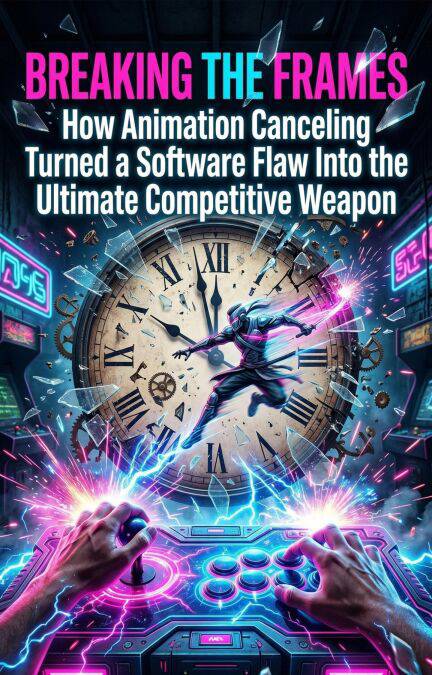
Breaking the Frames E-BOOK
How Animation Canceling Turned a Software Flaw Into the Ultimate Competitive Weapon
Cameron Pierce
E-book | Engels
€ 4,99
+ 4 punten
Uitvoering
Omschrijving
In the early days of video game development, animations were rigid sequences. Once a character started swinging a sword, the player had to wait for the animation to finish. Then, competitive players discovered a glitch: by inputting specific commands, they could abort the visual animation while still dealing damage, saving crucial fractions of a second.
This is the history of Animation Canceling, the exploit that birthed modern high-tier esports. This technical deep-dive reveals how a programming oversight fundamentally altered the balancing and pacing of competitive gaming. From the wave-dashing of Super Smash Bros to the intricate combos of Street Fighter, we dissect the math and muscle memory required to break the game's intended rules.
We explore how developers went from trying to patch these glitches out, to intentionally designing them into the core mechanics of modern titles. It is a testament to the obsessive ingenuity of the gaming community.
Master the invisible math of frame data. Discover how exploiting the engine's limitations separates the amateurs from the world champions.
This is the history of Animation Canceling, the exploit that birthed modern high-tier esports. This technical deep-dive reveals how a programming oversight fundamentally altered the balancing and pacing of competitive gaming. From the wave-dashing of Super Smash Bros to the intricate combos of Street Fighter, we dissect the math and muscle memory required to break the game's intended rules.
We explore how developers went from trying to patch these glitches out, to intentionally designing them into the core mechanics of modern titles. It is a testament to the obsessive ingenuity of the gaming community.
Master the invisible math of frame data. Discover how exploiting the engine's limitations separates the amateurs from the world champions.
Specificaties
Betrokkenen
- Auteur(s):
- Uitgeverij:
Inhoud
- Aantal bladzijden:
- 185
- Taal:
- Engels
Eigenschappen
- Productcode (EAN):
- 9783565302376
- Verschijningsdatum:
- 7/03/2026
- Uitvoering:
- E-book
- Formaat:
- ePub


Alleen bij Standaard Boekhandel
+ 4 punten op je klantenkaart van Standaard Boekhandel
Cadeau

AANGERADEN


Beoordelingen
We publiceren alleen reviews die voldoen aan de voorwaarden voor reviews. Bekijk onze voorwaarden voor reviews.