


- Afhalen na 1 uur in een winkel met voorraad
- Gratis thuislevering in België vanaf € 30
- Ruim aanbod met 7 miljoen producten
- Afhalen na 1 uur in een winkel met voorraad
- Gratis thuislevering in België vanaf € 30
- Ruim aanbod met 7 miljoen producten





Omschrijving
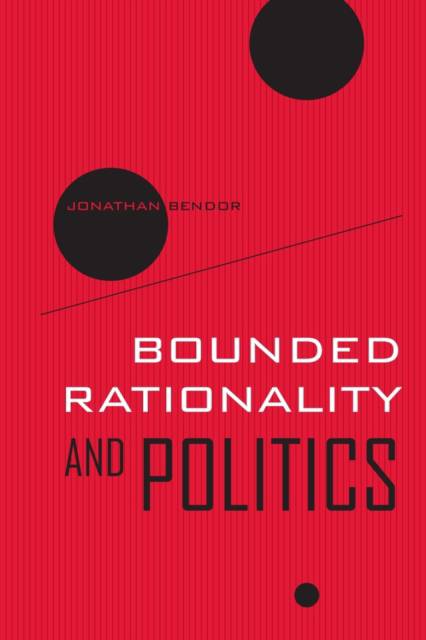
In Bounded Rationality and Politics, Jonathan Bendor considers two schools of behavioral economics--the first guided by Tversky and Kahneman's work on heuristics and biases, which focuses on the mistakes people make in judgment and choice; the second as described by Gerd Gigerenzer's program on fast and frugal heuristics, which emphasizes the effectiveness of simple rules of thumb. Finding each of these radically incomplete, Bendor's illuminating analysis proposes Herbert Simon's pathbreaking work on bounded rationality as a way to reconcile the inconsistencies between the two camps. Bendor shows that Simon's theory turns on the interplay between the cognitive constraints of decision makers and the complexity of their tasks.
Specificaties
Betrokkenen
- Auteur(s):
- Uitgeverij:
Inhoud
- Aantal bladzijden:
- 248
- Taal:
- Engels
- Reeks:
- Reeksnummer:
- nr. 6
Eigenschappen
- Productcode (EAN):
- 9780520259461
- Verschijningsdatum:
- 2/06/2010
- Uitvoering:
- Hardcover
- Formaat:
- Genaaid
- Afmetingen:
- 152 mm x 229 mm
- Gewicht:
- 535 g


Alleen bij Standaard Boekhandel
+ 322 punten op je klantenkaart van Standaard Boekhandel
Cadeau

AANGERADEN


Beoordelingen
We publiceren alleen reviews die voldoen aan de voorwaarden voor reviews. Bekijk onze voorwaarden voor reviews.