


- Afhalen na 1 uur in een winkel met voorraad
- Gratis thuislevering in België vanaf € 30
- Ruim aanbod met 7 miljoen producten
- Afhalen na 1 uur in een winkel met voorraad
- Gratis thuislevering in België vanaf € 30
- Ruim aanbod met 7 miljoen producten





€ 36,45
+ 72 punten
Uitvoering
Omschrijving
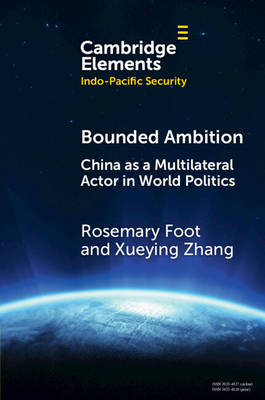
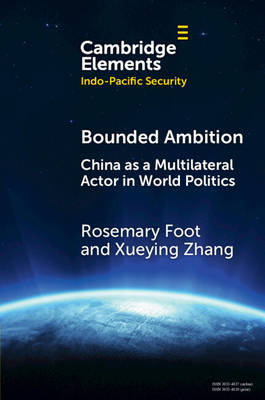
Since the 1980s, China has become steadily enmeshed in multilateral international organizations (MIOs). A rich body of rhetoric and behaviour is available to deepen our understanding of why and how Beijing engages with MIOs, additionally allowing a response to the question of whether China's engagement is shifting the global normative landscape in ways that significantly affect the on-going transition in global order. With these aims in mind, this Element first adopts a 'snapshot' macro-analytical perspective that draws on existing scholarship and official documentation to compare two eras of Chinese MIO engagement across several issue areas. The Element next adopts a case-study, process-driven, understanding of China and MIOs, examining the evolution of the Asian Infrastructure Investment Bank, the BRICS, and the Shanghai Cooperation Organization. It concludes that China, through incremental measures, is fashioning reordering that pushes in similar directions. However, this capacity to effect significant change varies considerably across institutional settings.
Specificaties
Betrokkenen
- Auteur(s):
- Uitgeverij:
Inhoud
- Aantal bladzijden:
- 78
- Taal:
- Engels
- Reeks:
Eigenschappen
- Productcode (EAN):
- 9781009740708
- Verschijningsdatum:
- 14/05/2026
- Uitvoering:
- Paperback
- Formaat:
- Trade paperback (VS)
- Afmetingen:
- 152 mm x 229 mm
- Gewicht:
- 117 g


Alleen bij Standaard Boekhandel
+ 72 punten op je klantenkaart van Standaard Boekhandel
Cadeau

AANGERADEN


Beoordelingen
We publiceren alleen reviews die voldoen aan de voorwaarden voor reviews. Bekijk onze voorwaarden voor reviews.