



Bedankt voor het vertrouwen het afgelopen jaar! Om jou te bedanken bieden we GRATIS verzending (in België) aan op alles gedurende de hele maand januari.
- Afhalen na 1 uur in een winkel met voorraad
- In januari gratis thuislevering in België
- Ruim aanbod met 7 miljoen producten
Bedankt voor het vertrouwen het afgelopen jaar! Om jou te bedanken bieden we GRATIS verzending (in België) aan op alles gedurende de hele maand januari.
- Afhalen na 1 uur in een winkel met voorraad
- In januari gratis thuislevering in België
- Ruim aanbod met 7 miljoen producten





€ 115,45
+ 230 punten
Omschrijving
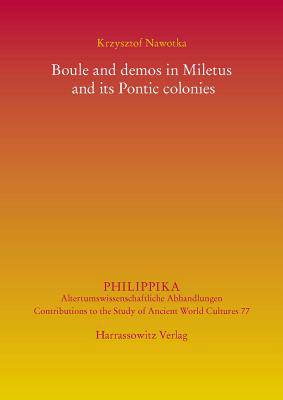
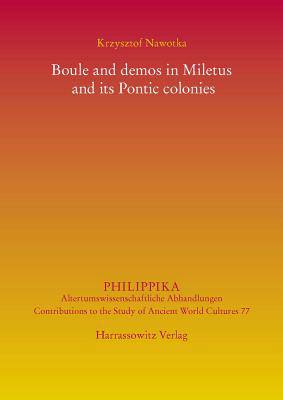
This book deals with the legislation in a group of ancient Greek cities - Miletus as well as Olbia, Istros, Tomis, Dionysopolis, Odessos, Apollonia, its colonies on the western shores of the Black Sea -, and it is based on the exhaustive study of public documents inscribed in stone. About 680 inscriptions of this kind have survived to our days. Apart from analyzing decrees, most commonly used in the constitutional study of ancient Greek cities, this book tries to extract data from tituli honoraria and other types of inscriptions popular in the late-Hellenistic and Roman Ages. As an exceptionally high proportion of ist inscriptions can be dated to a particular year, Miletus is particularly suited to a study of this nature. Even though most evidence is Hellenistic and Imperial, it demonstrates that a common pattern in legislation established in the archaic age, when Miletus planted ist Pontic colonies, was still detectible hundreds of years later. Despite ist being a study of legislation in Miletus and ist Pontic colonies, some questions treated are of a more general nature: those pertaining to the ties between Greek metropoleis and their colonies, to democracy in the Hellenistic world, and to the influence of Rome in the shift from Greek democracy to oligarchy. The book shows that Miletus and ist Pontic colonies were thriving democracies throughout the Hellenistic Age, with a legislation different to that in Athens. Inscriptions from Miletus attest the turn from democracy to oligarchy as late as the early 1st century A.D., which occurred almost certainly under the influence of Rome distrustful of Greek democracy.
Specificaties
Betrokkenen
- Auteur(s):
- Uitgeverij:
Inhoud
- Aantal bladzijden:
- 220
- Taal:
- Engels
Eigenschappen
- Productcode (EAN):
- 9783447102797
- Verschijningsdatum:
- 1/10/2014
- Uitvoering:
- Paperback
- Formaat:
- Trade paperback (VS)
- Afmetingen:
- 170 mm x 239 mm
- Gewicht:
- 476 g


Alleen bij Standaard Boekhandel
+ 230 punten op je klantenkaart van Standaard Boekhandel
SOLDEN


Beoordelingen
We publiceren alleen reviews die voldoen aan de voorwaarden voor reviews. Bekijk onze voorwaarden voor reviews.