


- Afhalen na 1 uur in een winkel met voorraad
- Gratis thuislevering in België vanaf € 30
- Ruim aanbod met 7 miljoen producten
- Afhalen na 1 uur in een winkel met voorraad
- Gratis thuislevering in België vanaf € 30
- Ruim aanbod met 7 miljoen producten





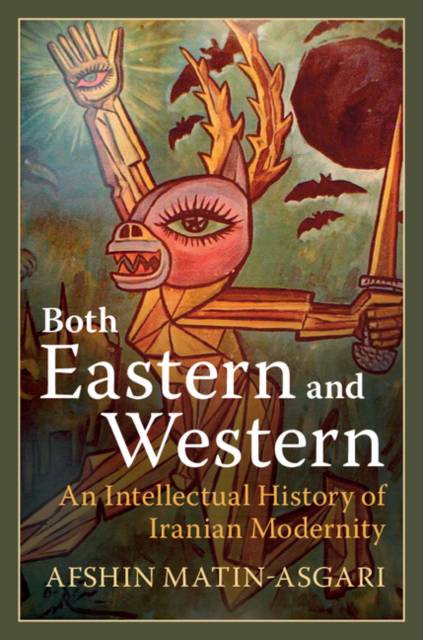
Both Eastern and Western
An Intellectual History of Iranian Modernity
Afshin Matin-Asgari
Paperback | Engels
€ 61,95
+ 123 punten
Omschrijving
Since the Iranian Revolution of 1979, many Western observers of Iran have seen the country caught between Eastern history and 'Western' modernity, between religion and secularity. As a result, analysis of political philosophy preceding the Revolution has become subsumed by this narrative. Here, Afshin Matin-Asgari proposes a revisionist work of intellectual history, challenging many of the dominant paradigms in Iranian and Middle Eastern historiography and offering a new narration. In charting the intellectual construction of Iranian modernity during the twentieth century, Matin-Asgari focuses on broad patterns of influential ideas and their relation to each other. These intellectual trends are studied in a global historical context, leading to the assertion that Iranian modernity has been sustained by at least a century of intense intellectual interaction with global ideologies. Turning many prevailing narratives on their heads, the author concludes that modern Iran can be seen as, culturally and intellectually, both Eastern and Western.
Specificaties
Betrokkenen
- Auteur(s):
- Uitgeverij:
Inhoud
- Aantal bladzijden:
- 370
- Taal:
- Engels
Eigenschappen
- Productcode (EAN):
- 9781108449977
- Verschijningsdatum:
- 16/08/2018
- Uitvoering:
- Paperback
- Formaat:
- Trade paperback (VS)
- Afmetingen:
- 227 mm x 154 mm
- Gewicht:
- 517 g


Alleen bij Standaard Boekhandel
+ 123 punten op je klantenkaart van Standaard Boekhandel
Cadeau

AANGERADEN


Beoordelingen
We publiceren alleen reviews die voldoen aan de voorwaarden voor reviews. Bekijk onze voorwaarden voor reviews.