


- Afhalen na 1 uur in een winkel met voorraad
- Gratis thuislevering in België vanaf € 30
- Ruim aanbod met 7 miljoen producten
- Afhalen na 1 uur in een winkel met voorraad
- Gratis thuislevering in België vanaf € 30
- Ruim aanbod met 7 miljoen producten





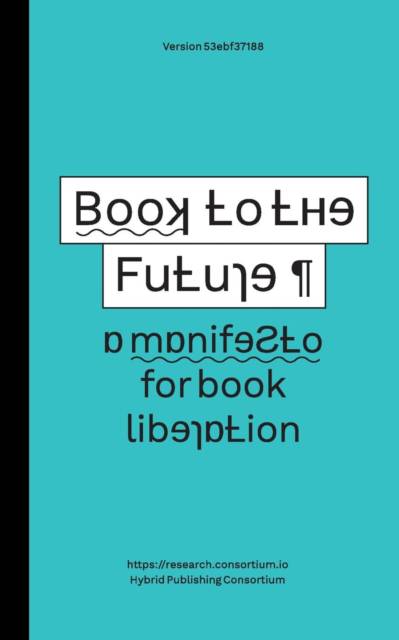
Book to the Future - a manifesto for book liberation
A Manifesto for Book Liberation
Simon Worthington
€ 8,45
+ 16 punten
Omschrijving
The Book Liberation Manifesto is an exploration of publishing outside of current corporate constraints and beyond the confines of book piracy. We believe that knowledge should be in free circulation to benefit humankind, which means an equitable and vibrant economy to support publishing, instead of the prevailing capitalist hand-me-down system of Sisyphean economic sustainability. Readers and books have been forced into pirate libraries, while sales channels have been monopolised by the big Internet giants which exact extortionate fees from publishers. We have three proposals. First, publications should be free-at-the-point-of-reading under a variety of open intellectual property regimes. Second, they should become fully digital - in order to facilitate ready reuse, distribution, algorithmic and computational use. Finally, Open Source source software for publishing should be treated as public infrastructure, with sustained research and investment. The result of such robust infrastructures will mean lower costs for manufacturing and faster publishing lifecycles, so that publishers and publics will be more readily able to afford to invent new futures
Specificaties
Betrokkenen
- Auteur(s):
- Uitgeverij:
Inhoud
- Aantal bladzijden:
- 48
- Taal:
- Engels
- Reeks:
Eigenschappen
- Productcode (EAN):
- 9781906496364
- Verschijningsdatum:
- 28/01/2015
- Uitvoering:
- Paperback
- Formaat:
- Trade paperback (VS)
- Afmetingen:
- 111 mm x 178 mm
- Gewicht:
- 54 g



Alleen bij Standaard Boekhandel
+ 16 punten op je klantenkaart van Standaard Boekhandel
Cadeau

AANGERADEN


Beoordelingen
We publiceren alleen reviews die voldoen aan de voorwaarden voor reviews. Bekijk onze voorwaarden voor reviews.