


- Afhalen na 1 uur in een winkel met voorraad
- Gratis thuislevering in België vanaf € 30
- Ruim aanbod met 7 miljoen producten
- Afhalen na 1 uur in een winkel met voorraad
- Gratis thuislevering in België vanaf € 30
- Ruim aanbod met 7 miljoen producten





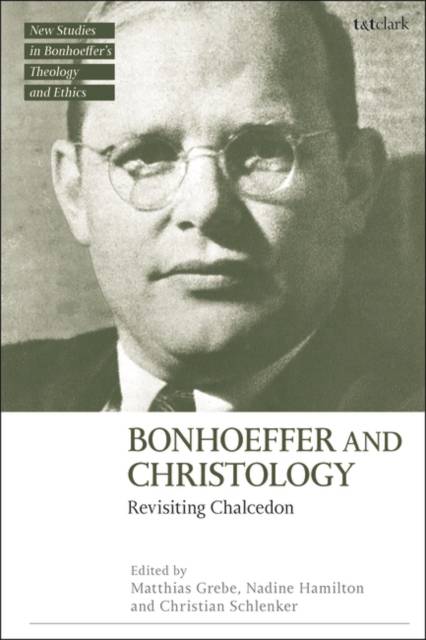
Bonhoeffer and Christology
Revisiting Chalcedon
€ 203,95
+ 407 punten
Omschrijving
The key question this volume addresses is 'how does Bonhoeffer's thought help to re(dis)cover the doctrine of Christ's two natures and one person and understand and renew it in its significance for a modern post-metaphysical and secular world?'
The volume takes a fresh look at Dietrich Bonhoeffer's Christology and brings it into a fruitful dialogue with current Christological debates. In a multi-perspectival, pluralistic world, Bonhoeffer's thinking offers a productive basis for conceptually incorporating the openness required for this task into academic theology. Bonhoeffer's theology offers a starting point for the recovery of a productive Christology that reflects the plurality of the globalized world, as Bonhoeffer's Christology begins precisely with this integration into worldly reality, whereby the world is understood in its plurality and polyphony. In this way, he characterizes his enterprise as follows: "What keeps gnawing at me is the question, what is Christianity, or who is Christ actually for us today" (DBWE 8, 362). Accordingly, it opens itself up not only to inner-Christian discussion but also to non-Christian worldviews, from which a basic ethical demand follows.Specificaties
Betrokkenen
- Uitgeverij:
Inhoud
- Aantal bladzijden:
- 296
- Taal:
- Engels
- Reeks:
Eigenschappen
- Productcode (EAN):
- 9780567708410
- Verschijningsdatum:
- 15/06/2023
- Uitvoering:
- Hardcover
- Formaat:
- Genaaid
- Afmetingen:
- 156 mm x 234 mm
- Gewicht:
- 585 g


Alleen bij Standaard Boekhandel
+ 407 punten op je klantenkaart van Standaard Boekhandel
Cadeau

AANGERADEN


Beoordelingen
We publiceren alleen reviews die voldoen aan de voorwaarden voor reviews. Bekijk onze voorwaarden voor reviews.