


- Afhalen na 1 uur in een winkel met voorraad
- Gratis thuislevering in België vanaf € 30
- Ruim aanbod met 7 miljoen producten
- Afhalen na 1 uur in een winkel met voorraad
- Gratis thuislevering in België vanaf € 30
- Ruim aanbod met 7 miljoen producten





€ 37,95
+ 75 punten
Omschrijving
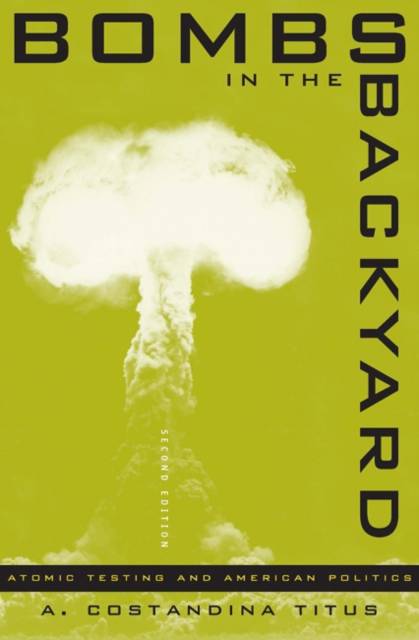
On January 27, 1951, the first atomic weapon was detonated over a section of desert known as Frenchman Flat in southern Nevada, providing dramatic evidence of the Nevada Test Site's beginnings. Fifty years later, author A. Costandina Titus reviews contemporary nuclear policy issues concerning the continued viability of that site for weapons testing. Titus has updated her now-classic study of atomic testing with fifteen years of political and cultural history, from the mid-1980s Reagan-Gorbachev nuclear standoff to the authorization of the Nevada Test Site Research Center, a Desert Research Institute facility scheduled to open in 2001. In this second edition of Bombs in the Backyard, Titus deftly covers the post-Cold War transformation of American atomic policy as well as our overarching cultural interest in all matters atomic, making this a must-read for anyone interested in atomic policy and politics.
Specificaties
Betrokkenen
- Auteur(s):
- Uitgeverij:
Inhoud
- Aantal bladzijden:
- 272
- Taal:
- Engels
- Reeks:
- Reeksnummer:
- nr. 25
Eigenschappen
- Productcode (EAN):
- 9780874173703
- Verschijningsdatum:
- 1/02/2001
- Uitvoering:
- Paperback
- Formaat:
- Trade paperback (VS)
- Afmetingen:
- 153 mm x 228 mm
- Gewicht:
- 371 g


Alleen bij Standaard Boekhandel
+ 75 punten op je klantenkaart van Standaard Boekhandel
Cadeau

AANGERADEN


Beoordelingen
We publiceren alleen reviews die voldoen aan de voorwaarden voor reviews. Bekijk onze voorwaarden voor reviews.