


- Afhalen na 1 uur in een winkel met voorraad
- Gratis thuislevering in België vanaf € 30
- Ruim aanbod met 7 miljoen producten
- Afhalen na 1 uur in een winkel met voorraad
- Gratis thuislevering in België vanaf € 30
- Ruim aanbod met 7 miljoen producten





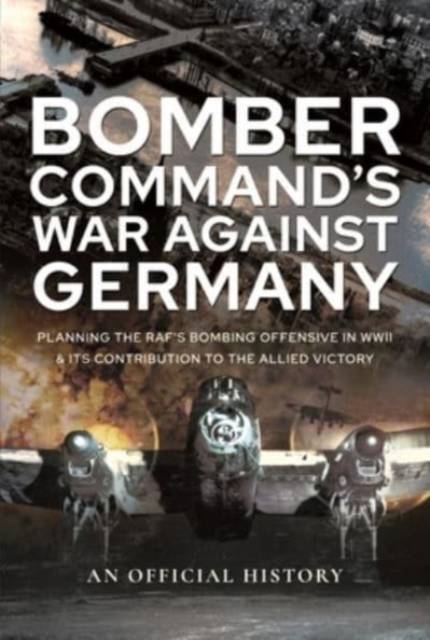
Bomber Command's War Against Germany
Planning the Raf's Bombing Offensive in WWII and Its Contribution to the Allied Victory
An Official History
Paperback | Engels
€ 23,95
+ 47 punten
Omschrijving
Britain's shift in World War II from precision bombing to area bombing, emphasizing the strategic decision to target German civilian areas to undermine morale and industrial capacity.
The all-too frequently cited mantra that 'the bomber will always get through' had dominated Britain's strategic air policy in the decades preceding the Second World War. However, the experiences of the Battle of Britain and the Blitz indicated that aerial bombardments were not as effective at disabling a country's ability to fight as had been believed.
This assessment was reinforced when the RAF's Bomber Command analyzed the results of their precision bombing efforts during the early years of the war. A growing body of evidence indicated that the great 'knock-out' blow expected to be delivered from the air was a fantasy and that it would only be through a prolonged campaign of attrition that the enemy could be worn down to such a degree that morale, the means of production, and the infrastructure of the enemy would be degraded to the point where its fighting ability was crippled.
The result of this assessment was a change of policy from precision bombing of carefully identified key installations, to area bombing with the declared intent of striking at the homes of the German workers, the factories where they worked regardless of the nature of such establishments or of the civilian casualties that would be the inevitable consequence.
In compiling this official analysis of the effectiveness of the RAF's strategic bombing campaign, the author was granted unrestricted access to Air Ministry, Cabinet, and other relevant departmental documents that were maintained for internal government use, enabling him to gain a complete and unbiased assessment of the contribution made by Bomber Command to the defeat of Germany. The conclusion he draws fully justifies the decisions taken, by both Britain and the USA, to bomb the German people into surrender.
The all-too frequently cited mantra that 'the bomber will always get through' had dominated Britain's strategic air policy in the decades preceding the Second World War. However, the experiences of the Battle of Britain and the Blitz indicated that aerial bombardments were not as effective at disabling a country's ability to fight as had been believed.
This assessment was reinforced when the RAF's Bomber Command analyzed the results of their precision bombing efforts during the early years of the war. A growing body of evidence indicated that the great 'knock-out' blow expected to be delivered from the air was a fantasy and that it would only be through a prolonged campaign of attrition that the enemy could be worn down to such a degree that morale, the means of production, and the infrastructure of the enemy would be degraded to the point where its fighting ability was crippled.
The result of this assessment was a change of policy from precision bombing of carefully identified key installations, to area bombing with the declared intent of striking at the homes of the German workers, the factories where they worked regardless of the nature of such establishments or of the civilian casualties that would be the inevitable consequence.
In compiling this official analysis of the effectiveness of the RAF's strategic bombing campaign, the author was granted unrestricted access to Air Ministry, Cabinet, and other relevant departmental documents that were maintained for internal government use, enabling him to gain a complete and unbiased assessment of the contribution made by Bomber Command to the defeat of Germany. The conclusion he draws fully justifies the decisions taken, by both Britain and the USA, to bomb the German people into surrender.
Specificaties
Betrokkenen
- Auteur(s):
- Uitgeverij:
Inhoud
- Aantal bladzijden:
- 256
- Taal:
- Engels
Eigenschappen
- Productcode (EAN):
- 9781526798251
- Verschijningsdatum:
- 30/05/2026
- Uitvoering:
- Paperback
- Formaat:
- Trade paperback (VS)
- Afmetingen:
- 155 mm x 234 mm



Alleen bij Standaard Boekhandel
+ 47 punten op je klantenkaart van Standaard Boekhandel
AANGERADEN


Beoordelingen
We publiceren alleen reviews die voldoen aan de voorwaarden voor reviews. Bekijk onze voorwaarden voor reviews.