


- Afhalen na 1 uur in een winkel met voorraad
- Gratis thuislevering in België vanaf € 30
- Ruim aanbod met 7 miljoen producten
- Afhalen na 1 uur in een winkel met voorraad
- Gratis thuislevering in België vanaf € 30
- Ruim aanbod met 7 miljoen producten





€ 40,45
+ 80 punten
Eenvoudig bestellen
Veilig betalen


Gratis thuislevering vanaf € 30 (via bpost)
Gratis levering in je Standaard Boekhandel
Omschrijving
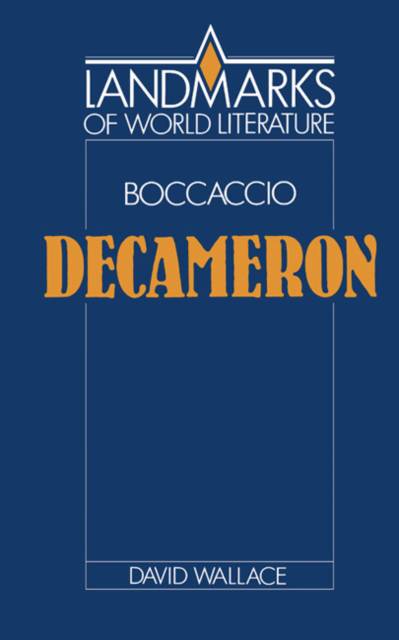
In Boccaccio's innovative text ten young people leave Florence to escape the Black Death of 1348, and organize their collective life in the countryside through the pleasure and discipline of storytelling. David Wallace guides the reader through their one hundred novelle, which explore both new and familiar conflicts with unprecendented subtlety, urgency and humor: everything from the struggle for domestic space, fought out between individual men and women, to the greater politics of the Mediterranean world where Christian and Arab meet. He emphasizes the relationship between the Decameron and the precocious proto-capitalist culture of Boccaccio's Florence. He also discusses gender issues and the influence of the text, particularly on Chaucer and on the novel.
Specificaties
Betrokkenen
- Auteur(s):
- Uitgeverij:
Inhoud
- Aantal bladzijden:
- 132
- Taal:
- Engels
- Reeks:
Eigenschappen
- Productcode (EAN):
- 9780521388511
- Verschijningsdatum:
- 30/08/1991
- Uitvoering:
- Paperback
- Formaat:
- Trade paperback (VS)
- Afmetingen:
- 129 mm x 200 mm
- Gewicht:
- 145 g



Alleen bij Standaard Boekhandel
+ 80 punten op je klantenkaart van Standaard Boekhandel
CADEAU

AANGERADEN


Beoordelingen
We publiceren alleen reviews die voldoen aan de voorwaarden voor reviews. Bekijk onze voorwaarden voor reviews.