


- Afhalen na 1 uur in een winkel met voorraad
- Gratis thuislevering in België vanaf € 30
- Ruim aanbod met 7 miljoen producten
- Afhalen na 1 uur in een winkel met voorraad
- Gratis thuislevering in België vanaf € 30
- Ruim aanbod met 7 miljoen producten





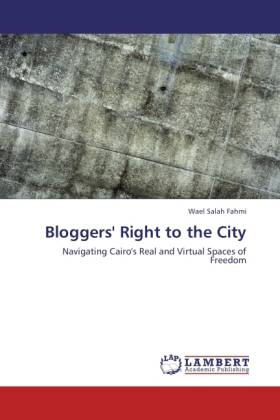
Bloggers' Right to the City
Navigating Cairo's Real and Virtual Spaces of Freedom
Wael Salah Fahmi
Paperback | Engels
€ 48,45
+ 96 punten
Omschrijving
Faced with formidable challenges to expression in Cairo's public spaces, urban blogger activists have developed new means of articulating dissent with spatial tactics from boycott campaigns, cyber-activism and protest art to innovations in mobilisation, modes of communication and organisational flexibility. Urban blogger activists have transformed Spaces of Freedom into heterotopian zones for public protest, employing urban installations and street graffiti, prompting the construction of a significant site of urban resistance and spatial contestation. This was particularly evident during January 2011 pro-democracy street rallies and sit-ins within Cairo s Tahrir Square, this part of the city being regarded as a contested site for collective action and as a symbolic space for urban youth's political participation and spatial appropriation. The emergence of this grassroots street activism opens up a new public sphere through which the role of urban governance might be contested to accommodate cultural identities within various forms of spatiality and popular democracy.
Specificaties
Betrokkenen
- Auteur(s):
- Uitgeverij:
Inhoud
- Aantal bladzijden:
- 96
- Taal:
- Engels
Eigenschappen
- Productcode (EAN):
- 9783846528471
- Verschijningsdatum:
- 18/10/2011
- Uitvoering:
- Paperback
- Afmetingen:
- 152 mm x 229 mm
- Gewicht:
- 150 g


Alleen bij Standaard Boekhandel
+ 96 punten op je klantenkaart van Standaard Boekhandel
Cadeau

AANGERADEN


Beoordelingen
We publiceren alleen reviews die voldoen aan de voorwaarden voor reviews. Bekijk onze voorwaarden voor reviews.