


- Afhalen na 1 uur in een winkel met voorraad
- Gratis thuislevering in België vanaf € 30
- Ruim aanbod met 7 miljoen producten
- Afhalen na 1 uur in een winkel met voorraad
- Gratis thuislevering in België vanaf € 30
- Ruim aanbod met 7 miljoen producten




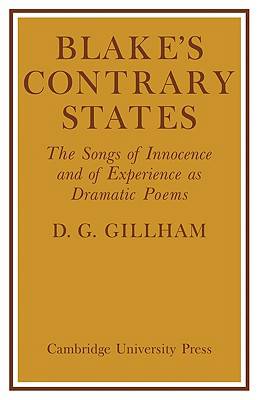
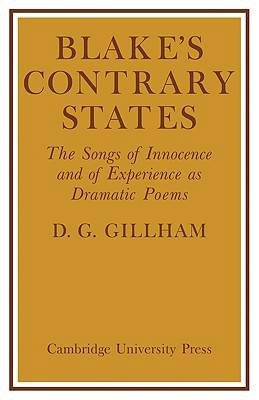
Blake's Contrary States
The 'Songs of Innocence and Experience' as Dramatic Poems
Bill Gillham, D G Gillham, Gillham Bill
Paperback | Engels
€ 64,95
+ 129 punten
Omschrijving
In a fresh examination of Blake's Songs of Innocence and Experience, poems which often seem strangely contradictory, Dr Gillham suggests that Blake is not stating his own thoughts and feelings but presenting 'dramatic' statements; he projects himself into other points of view, thus exploring possible states of being and feeling in which spiritual energy expresses itself. Certain eighteenth-century theories of the mind are examines, explaining the mind in terms of self-interest. Blake included this view in his vision of 'Experience'. The poems suggest, and explore the possibility that such a view, while true of the mind in one state, is not true of it in another. This other state, 'Innocence', is more outgoing, more responsible and more self-aware. The two states lead to quite different moral, religious and political beliefs, though they can use the same terms in doing so. Dr Gillham shows that poems seemingly in conflict can be seen from a consistent point of view.
Specificaties
Betrokkenen
- Auteur(s):
- Uitgeverij:
Inhoud
- Aantal bladzijden:
- 268
- Taal:
- Engels
Eigenschappen
- Productcode (EAN):
- 9780521129862
- Verschijningsdatum:
- 4/02/2010
- Uitvoering:
- Paperback
- Formaat:
- Trade paperback (VS)
- Afmetingen:
- 140 mm x 216 mm
- Gewicht:
- 344 g


Alleen bij Standaard Boekhandel
+ 129 punten op je klantenkaart van Standaard Boekhandel
AANGERADEN


Beoordelingen
We publiceren alleen reviews die voldoen aan de voorwaarden voor reviews. Bekijk onze voorwaarden voor reviews.