


- Afhalen na 1 uur in een winkel met voorraad
- Gratis thuislevering in België vanaf € 30
- Ruim aanbod met 7 miljoen producten
- Afhalen na 1 uur in een winkel met voorraad
- Gratis thuislevering in België vanaf € 30
- Ruim aanbod met 7 miljoen producten





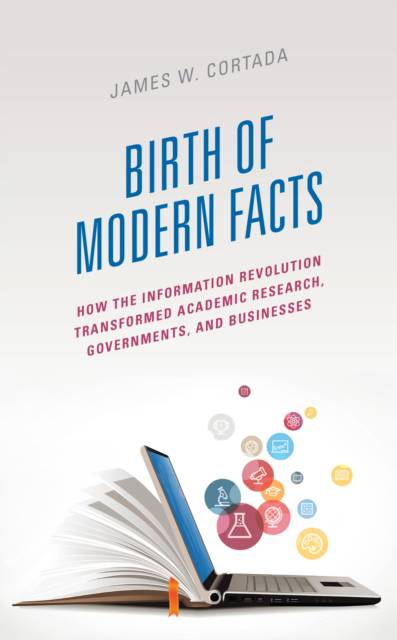
Birth of Modern Facts
How the Information Revolution Transformed Academic Research, Governments, and Businesses
James W Cortada
Hardcover | Engels
€ 220,45
+ 440 punten
Omschrijving
For over twenty years, James W. Cortada has pioneered research into how information shapes society. In this book he tells the story of how information evolved since the mid-nineteenth century. Cortada argues that information increased in quantity, became more specialized by discipline (e.g., mathematics, science, political science), and more organized. Information increased in volume due to a series of innovations, such as the electrification of communications and the development of computers, but also due to the organization of facts and knowledge by discipline, making it easier to manage and access. He looks at what major disciplines have done to shape the nature of modern information, devoting chapters to the most obvious ones. Cortada argues that understanding how some features of information evolved is useful for those who work in subjects that deal with their very construct and application, such as computer scientists and those exploring social media and, most recently, history. The Birth of Modern Facts builds on Cortada's prior books examining how information became a central feature of modern society, most notably as a sequel to All the Facts: A History of Information in the United States since 1870 (OUP, 2016) and Building Blocks of Society: History, Information Ecosystems, and Infrastructures (R&L, 2021).
Specificaties
Betrokkenen
- Auteur(s):
- Uitgeverij:
Inhoud
- Aantal bladzijden:
- 462
- Taal:
- Engels
Eigenschappen
- Productcode (EAN):
- 9781538173909
- Verschijningsdatum:
- 19/01/2023
- Uitvoering:
- Hardcover
- Formaat:
- Genaaid
- Afmetingen:
- 152 mm x 229 mm
- Gewicht:
- 843 g



Alleen bij Standaard Boekhandel
+ 440 punten op je klantenkaart van Standaard Boekhandel
Cadeau

AANGERADEN


Beoordelingen
We publiceren alleen reviews die voldoen aan de voorwaarden voor reviews. Bekijk onze voorwaarden voor reviews.