


- Afhalen na 1 uur in een winkel met voorraad
- Gratis thuislevering in België vanaf € 30
- Ruim aanbod met 7 miljoen producten
- Afhalen na 1 uur in een winkel met voorraad
- Gratis thuislevering in België vanaf € 30
- Ruim aanbod met 7 miljoen producten





€ 82,45
+ 164 punten
Omschrijving
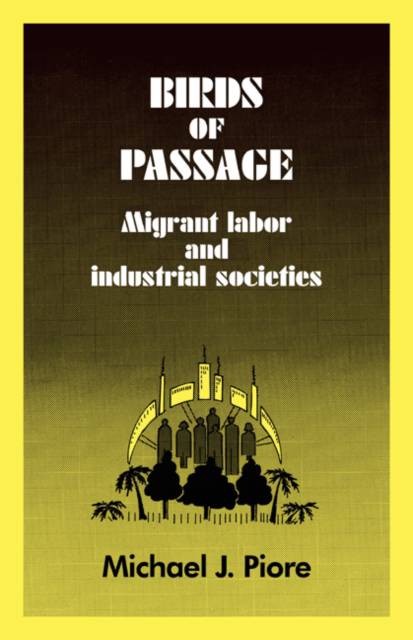
Birds of Passage presents an unorthodox analysis of migration ion to urban industrial societies from underdeveloped rual areas. It argues that such migrations are a continuing feature of industrial societies and that they are generated by forces inherent in the nature of industrial economies. It explains why conventional economic theory finds such migrations so difficult to comprehend, and challenges a set of older assumptions that supported the view that these migrations were beneficial to both sending and receiving societies. Professor Piore seriously questions whether migration actually relieves population pressure and rural unemployment, and whether it develops skills necessary for the emergence of an industrial labour force in the home country. Furthermore, he criticizes the notion that in the long run migrant labour complements native labour. On the basis of this critique, he develops an alternative theory of the nature of the migration process.
Specificaties
Betrokkenen
- Auteur(s):
- Uitgeverij:
Inhoud
- Aantal bladzijden:
- 240
- Taal:
- Engels
Eigenschappen
- Productcode (EAN):
- 9780521280587
- Verschijningsdatum:
- 1/11/1980
- Uitvoering:
- Paperback
- Formaat:
- Trade paperback (VS)
- Afmetingen:
- 140 mm x 216 mm
- Gewicht:
- 308 g


Alleen bij Standaard Boekhandel
+ 164 punten op je klantenkaart van Standaard Boekhandel
Cadeau

AANGERADEN


Beoordelingen
We publiceren alleen reviews die voldoen aan de voorwaarden voor reviews. Bekijk onze voorwaarden voor reviews.