


- Afhalen na 1 uur in een winkel met voorraad
- Gratis thuislevering in België vanaf € 30
- Ruim aanbod met 7 miljoen producten
- Afhalen na 1 uur in een winkel met voorraad
- Gratis thuislevering in België vanaf € 30
- Ruim aanbod met 7 miljoen producten





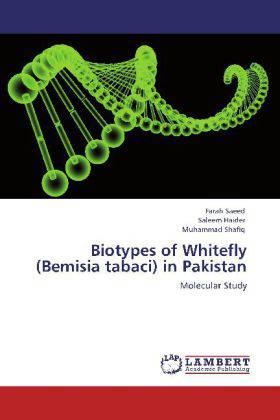
Biotypes of Whitefly (Bemisia tabaci) in Pakistan
Molecular Study
Farah Saeed, Saleem Haider, Muhammad Shafiq
Paperback | Engels
€ 64,45
+ 128 punten
Omschrijving
The cosmopolitan whitefly species, Bemisia tabaci has always been regarded as pests to a large range of worldwide crops. They are capable of transmitting plant viruses of different groups. Well-studied B. tabaci populations that have been differentiated are referred to as races or biotypes. Some of the commonly reported biotypes are B, Q, M, B2, L, H, A, C, N, K, R, P, E, S, J and AN. An analysis of genetic diversity of whitefly across Pakistan was conducted. It was based upon phylogenetic analysis of DNA sequence of mitochondrial gene Cytochrom Oxidase I. All sequences of mtCOI genes of whitefly samples from eight different geographical areas (Arif wala, Multan, Lodhran, Shujaabad, Bahawalnagar, Kabir wala, Tiba Sultanpur and Khanewal) were grouped in B. tabaci (Asia II). Sequencing results showed that clones obtained in this study were less diverse as they had between 98.3% and 99.6% identity among themselves and between 98.7% and 100% identity with the reported sequences available in databases. This study emphasizes more focus on molecular analysis of whiteflies and it provides relatively widely distributed data regarding the molecular characterization of whitefly from Pakistan.
Specificaties
Betrokkenen
- Auteur(s):
- Uitgeverij:
Inhoud
- Aantal bladzijden:
- 56
- Taal:
- Engels
Eigenschappen
- Productcode (EAN):
- 9783848412310
- Verschijningsdatum:
- 23/02/2012
- Uitvoering:
- Paperback
- Afmetingen:
- 152 mm x 220 mm
- Gewicht:
- 95 g


Alleen bij Standaard Boekhandel
+ 128 punten op je klantenkaart van Standaard Boekhandel
AANGERADEN


Beoordelingen
We publiceren alleen reviews die voldoen aan de voorwaarden voor reviews. Bekijk onze voorwaarden voor reviews.