


- Afhalen na 1 uur in een winkel met voorraad
- Gratis thuislevering in België vanaf € 30
- Ruim aanbod met 7 miljoen producten
- Afhalen na 1 uur in een winkel met voorraad
- Gratis thuislevering in België vanaf € 30
- Ruim aanbod met 7 miljoen producten





Omschrijving
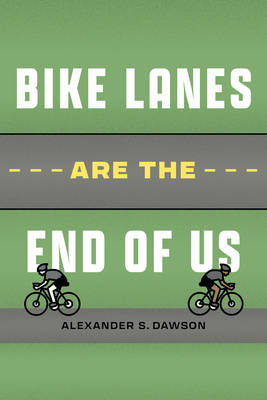
Bike lanes are aspirational projects--that is, they speak to a series of dreams about what North American cities could be, especially in and around an environmentalist and Europhilic vision (the latter having a very long history in the Americas). But the creation of bike lanes maps onto preexisting modes of transport and forms of racial and spatial inequality. Bike lane advocacy in North American cities has in many ways replicated the weak social ties that characterize these spaces.
Amsterdam's oft-cited bike lanes are integrated within a system of regional trains, buses, and subways, allowing riders to park their bikes and engage in multimodal commuting. However, in American settings, these projects have been slow to launch, in part because of the aversion that middle-class and wealthy North Americans have toward public transport. This aversion is uneven, but public transport remains much more the preserve of working people and people of color in these cities.
Recent controversial bike lane initiatives in Mexico City and Vancouver show how such projects not only create uproar among monied urbanites but may actually displace entire modes of transportation used primarily by marginalized residents (especially in the case of Mexico City), when the wish to imitate European models defeats efforts to see a North American city for what it is. In comparing Mexico City and Vancouver, Bike Lanes Are the End of Us traces how bike lane politics collide with distinct racial, spatial, and infrastructural realities to produce "green" reforms that can reinforce existing inequalities just as readily as they promise greater mobility.
Specificaties
Betrokkenen
- Auteur(s):
- Uitgeverij:
Inhoud
- Aantal bladzijden:
- 350
- Taal:
- Engels
Eigenschappen
- Productcode (EAN):
- 9780826500717
- Verschijningsdatum:
- 15/01/2027
- Uitvoering:
- Hardcover
- Formaat:
- Genaaid
- Afmetingen:
- 152 mm x 229 mm
- Gewicht:
- 453 g


Alleen bij Standaard Boekhandel
+ 277 punten op je klantenkaart van Standaard Boekhandel
Cadeau

AANGERADEN


Beoordelingen
We publiceren alleen reviews die voldoen aan de voorwaarden voor reviews. Bekijk onze voorwaarden voor reviews.