


- Afhalen na 1 uur in een winkel met voorraad
- Gratis thuislevering in België vanaf € 30
- Ruim aanbod met 7 miljoen producten
- Afhalen na 1 uur in een winkel met voorraad
- Gratis thuislevering in België vanaf € 30
- Ruim aanbod met 7 miljoen producten





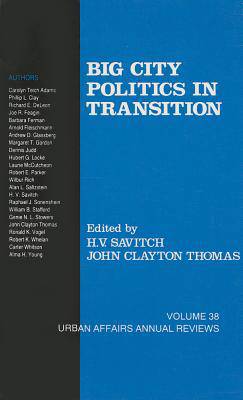
Big City Politics in Transition
€ 192,45
+ 384 punten
Omschrijving
Big City Politics in Transition is a good reference volume packed with much important and up-to-date information. --Environment and Planning "A timely book that revisits the field so well described by Edward Banfield (Big City Politics, 1965) as of the early 1960s but which has changed greatly since then. . . . Each profile shows a high level of research, and the notes provide a thorough bibliography of the literature. A tremendously useful book for readers at all levels." --Choice "This book was inspired by Edward Banfield′s Big City Politics of 1965. [In Big City Politics in Transition] the introduction amply justifies the need for a new volume. . . . This multiauthored volume examines thirteen cities: Boston, Philadelphia, Chicago, Detroit, Saint Louis, Atlanta, Miami, New Orleans, Denver, Houston, Los Angeles, San Francisco, and Seattle. Each chapter traces the economic, social, and political changes since 1965 and current political problems. . . . It is impossible to do justice to all thirteen studies in a short review but this book represents a very useful summation of the current state of the major US cities." --Environment and Planning C In 1965 Big City Politics ambitiously attempted to describe the workings of America′s big cities, using nine large U.S. cities as examples. By the time it was published, urban racial conflict, declining economic power, and growing concentrations of low-income populations had changed the face of the urban political scene. Big City Politics in Transition examines how government and administration in America′s largest cities have changed between 1960 and 1990. The contributors to this intriguing volume trace demographic and economic change over this vital and, at times, turbulent period, explaining what those changes mean for politics, policies, and the general quality of life. The chapters address the demographics and economic base of the cities under consideration, the role and structure of city government, including interaction with state houses, suburbs and Washington, DC, and the roles played by interest groups and political influentials. The cities profiled include: Boston, Philadelphia, Chicago, Detroit, St. Louis, Atlanta, Miami, New Orleans, Denver, Houston, Los Angeles, San Francisco, and Seattle. Underlying these concerns is an examination of the political character of the city, (the composition and cohesion of the coalitions, groups, organizations, and individual actors that shape major decisions). A balanced and insightful look at urban politics in the late 20th century, this volume will enlighten academics and professionals in urban studies, policy studies, and political science.
Specificaties
Betrokkenen
- Uitgeverij:
Inhoud
- Aantal bladzijden:
- 272
- Taal:
- Engels
- Reeks:
- Reeksnummer:
- nr. 38
Eigenschappen
- Productcode (EAN):
- 9780803940314
- Verschijningsdatum:
- 14/06/1991
- Uitvoering:
- Paperback
- Formaat:
- Trade paperback (VS)
- Afmetingen:
- 135 mm x 213 mm
- Gewicht:
- 362 g

Alleen bij Standaard Boekhandel
+ 384 punten op je klantenkaart van Standaard Boekhandel
Cadeau

AANGERADEN


Beoordelingen
We publiceren alleen reviews die voldoen aan de voorwaarden voor reviews. Bekijk onze voorwaarden voor reviews.