Standaard Boekhandel gebruikt cookies en gelijkaardige technologieën om de website goed te laten werken en je een betere surfervaring te bezorgen.
Hieronder kan je kiezen welke cookies je wilt inschakelen:
Technische en functionele cookies
Deze cookies zijn essentieel om de website goed te laten functioneren, en laten je toe om bijvoorbeeld in te loggen. Je kan deze cookies niet uitschakelen.
Analytische cookies
Deze cookies verzamelen anonieme informatie over het gebruik van onze website. Op die manier kunnen we de website beter afstemmen op de behoeften van de gebruikers.
Marketingcookies
Deze cookies delen je gedrag op onze website met externe partijen, zodat je op externe platformen relevantere advertenties van Standaard Boekhandel te zien krijgt.
Bedankt voor het vertrouwen het afgelopen jaar! Om jou te bedanken bieden we GRATIS verzending (in België) aan op alles gedurende de hele maand januari.
Afhalen na 1 uur in een winkel met voorraad
In januari gratis thuislevering in België
Ruim aanbod met 7 miljoen producten
Bedankt voor het vertrouwen het afgelopen jaar! Om jou te bedanken bieden we GRATIS verzending (in België) aan op alles gedurende de hele maand januari.
Je kan maximaal 250 producten tegelijk aan je winkelmandje toevoegen. Verwijdere enkele producten uit je winkelmandje, of splits je bestelling op in meerdere bestellingen.
In januari gratis thuislevering in België (via bpost)
Gratis levering in je Standaard Boekhandel
Omschrijving
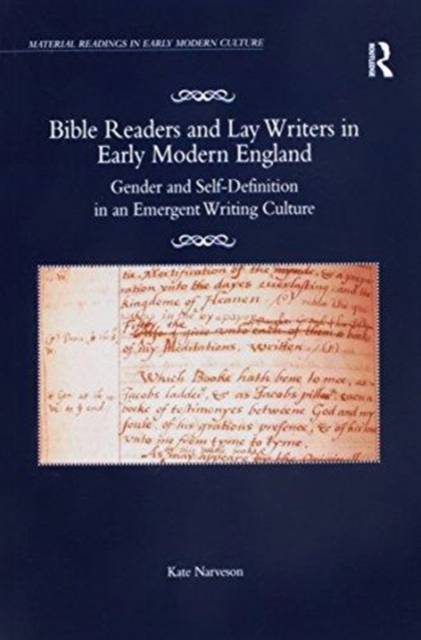
Bible Readers and Lay Writers in Early Modern England studies how immersion in the Bible among layfolk gave rise to a non-professional writing culture, one of the first instances of ordinary people taking up the pen as part of their daily lives. Kate Narveson examines the development of the culture, looking at the close connection between reading and writing practices, the influence of gender, and the habit of applying Scripture to personal experience. She explores too the tensions that arose between lay and clergy as layfolk embraced not just the chance to read Scripture but the opportunity to create a written record of their ideas and experiences, acquiring a new control over their spiritual self-definition and a new mode of gaining status in domestic and communal circles. Based on a study of print and manuscript sources from 1580 to 1660, this book begins by analyzing how lay people were taught to read Scripture both through explicit clerical instruction in techniques such as note-taking and collation, and through indirect means such as exposure to sermons, and then how they adapted those techniques to create their own devotional writing. The first part of the book concludes with case studies of three ordinary lay people, Anne Venn, Nehemiah Wallington, and Richard Willis. The second half of the study turns to the question of how gender registers in this lay scripturalist writing, offering extended attention to the little-studied meditations of Grace, Lady Mildmay. Narveson concludes by arguing that by mid-century, despite clerical anxiety, writing was central to lay engagement with Scripture and had moved the center of religious experience beyond the church walls.