



Bedankt voor het vertrouwen het afgelopen jaar! Om jou te bedanken bieden we GRATIS verzending (in België) aan op alles gedurende de hele maand januari.
- Afhalen na 1 uur in een winkel met voorraad
- In januari gratis thuislevering in België
- Ruim aanbod met 7 miljoen producten
Bedankt voor het vertrouwen het afgelopen jaar! Om jou te bedanken bieden we GRATIS verzending (in België) aan op alles gedurende de hele maand januari.
- Afhalen na 1 uur in een winkel met voorraad
- In januari gratis thuislevering in België
- Ruim aanbod met 7 miljoen producten





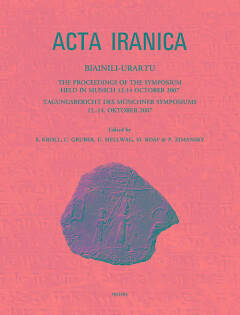
Biainili-Urartu
The Proceedings of the Symposium Held in Munich 12-14 October 2007 / Tagungsbericht Des Munchner Symposiums 12.-14. Oktober 2007
Gruber C. Kroll S., Roaf M. Hellwag U.
€ 252,95
+ 505 punten
Omschrijving
This overview of current research on the Iron-Age kingdom of Urartu offers studies by thirty scholars who met at an international symposium at Munich University in October 2007. Biainili, as this polity was known to its inhabitants, dominated the mountainous region of what is now eastern Turkey, north-western Iran, and southern Armenia from the ninth to the seventh centuries BC and is distinguished by its unique language and material culture. It was a rival to the Neo-Assyrian Empire, which provides much of the evidence for its history as well as the name by which is best known, Urartu (Biblical Ararat). An introductory chapter giving a general account of the history and culture of the kingdom is followed by more focused contributions on numerous aspects of Urartian culture based on textual records and archaeological sources both from Urartu itself and from neighbouring regions. As the most substantial treatment of the subject to appear in the 21st century, this book brings to light recent research in all areas of the kingdom, considers revisions to traditional chronology from several viewpoints, and provides an extensive bibliography.
Specificaties
Betrokkenen
- Auteur(s):
- Uitgeverij:
Inhoud
- Aantal bladzijden:
- 536
- Taal:
- Engels
- Reeks:
- Reeksnummer:
- nr. 51
Eigenschappen
- Productcode (EAN):
- 9789042924383
- Verschijningsdatum:
- 2/04/2012
- Uitvoering:
- Hardcover
- Formaat:
- Genaaid
- Gewicht:
- 1173 g


Alleen bij Standaard Boekhandel
+ 505 punten op je klantenkaart van Standaard Boekhandel
SOLDEN


Beoordelingen
We publiceren alleen reviews die voldoen aan de voorwaarden voor reviews. Bekijk onze voorwaarden voor reviews.