


- Afhalen na 1 uur in een winkel met voorraad
- Gratis thuislevering in België vanaf € 30
- Ruim aanbod met 7 miljoen producten
- Afhalen na 1 uur in een winkel met voorraad
- Gratis thuislevering in België vanaf € 30
- Ruim aanbod met 7 miljoen producten





€ 29,52
+ 29 punten
Omschrijving
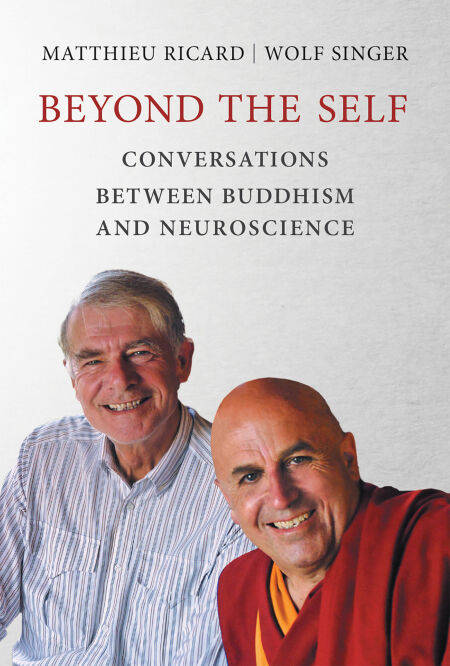
A Buddhist monk and esteemed neuroscientist discuss their converging—and diverging—views on the mind and self, consciousness and the unconscious, free will and perception, and more.
Buddhism shares with science the task of examining the mind empirically; it has pursued, for two millennia, direct investigation of the mind through penetrating introspection. Neuroscience, on the other hand, relies on third-person knowledge in the form of scientific observation. In this book, Matthieu Ricard, a Buddhist monk trained as a molecular biologist, and Wolf Singer, a distinguished neuroscientist—close friends, continuing an ongoing dialogue—offer their perspectives on the mind, the self, consciousness, the unconscious, free will, epistemology, meditation, and neuroplasticity.
Ricard and Singer’s wide-ranging conversation stages an enlightening and engaging encounter between Buddhism’s wealth of experiential findings and neuroscience’s abundance of experimental results. They discuss, among many other things, the difference between rumination and meditation (rumination is the scourge of meditation, but psychotherapy depends on it); the distinction between pure awareness and its contents; the Buddhist idea (or lack of one) of the unconscious and neuroscience’s precise criteria for conscious and unconscious processes; and the commonalities between cognitive behavioral therapy and meditation. Their views diverge (Ricard asserts that the third-person approach will never encounter consciousness as a primary experience) and converge (Singer points out that the neuroscientific understanding of perception as reconstruction is very like the Buddhist all-discriminating wisdom) but both keep their vision trained on understanding fundamental aspects of human life.
Buddhism shares with science the task of examining the mind empirically; it has pursued, for two millennia, direct investigation of the mind through penetrating introspection. Neuroscience, on the other hand, relies on third-person knowledge in the form of scientific observation. In this book, Matthieu Ricard, a Buddhist monk trained as a molecular biologist, and Wolf Singer, a distinguished neuroscientist—close friends, continuing an ongoing dialogue—offer their perspectives on the mind, the self, consciousness, the unconscious, free will, epistemology, meditation, and neuroplasticity.
Ricard and Singer’s wide-ranging conversation stages an enlightening and engaging encounter between Buddhism’s wealth of experiential findings and neuroscience’s abundance of experimental results. They discuss, among many other things, the difference between rumination and meditation (rumination is the scourge of meditation, but psychotherapy depends on it); the distinction between pure awareness and its contents; the Buddhist idea (or lack of one) of the unconscious and neuroscience’s precise criteria for conscious and unconscious processes; and the commonalities between cognitive behavioral therapy and meditation. Their views diverge (Ricard asserts that the third-person approach will never encounter consciousness as a primary experience) and converge (Singer points out that the neuroscientific understanding of perception as reconstruction is very like the Buddhist all-discriminating wisdom) but both keep their vision trained on understanding fundamental aspects of human life.
Specificaties
Betrokkenen
- Auteur(s):
- Uitgeverij:
Inhoud
- Aantal bladzijden:
- 296
- Taal:
- Engels
- Reeks:
Eigenschappen
- Productcode (EAN):
- 9780262343039
- Verschijningsdatum:
- 2/11/2017
- Uitvoering:
- E-book
- Beveiligd met:
- Adobe DRM
- Formaat:
- ePub


Alleen bij Standaard Boekhandel
+ 29 punten op je klantenkaart van Standaard Boekhandel
CADEAU

AANGERADEN


Beoordelingen
We publiceren alleen reviews die voldoen aan de voorwaarden voor reviews. Bekijk onze voorwaarden voor reviews.