


- Afhalen na 1 uur in een winkel met voorraad
- Gratis thuislevering in België vanaf € 30
- Ruim aanbod met 7 miljoen producten
- Afhalen na 1 uur in een winkel met voorraad
- Gratis thuislevering in België vanaf € 30
- Ruim aanbod met 7 miljoen producten




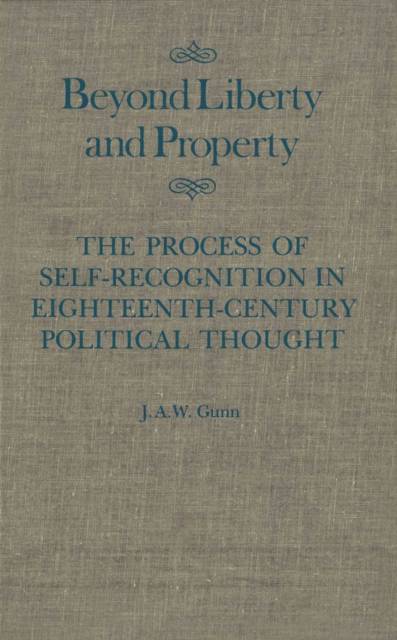
Beyond Liberty and Property
The Process of Self-Recognition in Eighteenth-Century Political Thought Volume 6
Gunn, J a W Gunn
€ 172,45
Omschrijving
Professor Gunn presents a fresh, revealing picture of the public mind in Britain, from the Glorious Revolution to the First Reform Act, showing how British people of the eighteenth century came to a new understanding of politics. Departing form the usual approach based upon weighty treatises by a few prominent commentators, he employs a wide range of documents: newspapers, magazines, parliamentary debates, sermons, pamphlets, judicial records, and private correspondence. He examines topics that have generally escaped even specialist notice and takes up questions long regarded as settled, casting a new and different light on them. The themes explored include political liberty, "legal tyranny," defences of influence in government, recognition of the Opposition, and the development of organic categories of political analysis - the latter in a chapter that explodes the association often presumed between organicism and conservative modes of thought. A chapter on the "Fourth Estate" examines the gradual process of legitimation of "interests," culminating in the influence of the press. Central to the account of new political forces and their recognition is the idea of public opinion, which evolved during this period from the notion of public spirit. Chapters on the classical legacy of the century and on the High-Tories examine two backward-looking aspects of the political cultrure. Tracing the persistent influence of High-Toryism, Gunn questions the conventional wisdom about eighteenth-century ideological consensus in general and Whig solidarity in particular. He demonstrates that theories of government from the seventeenth century survived to a degree not previously admitted by modern scholarship.
Specificaties
Betrokkenen
- Auteur(s):
- Uitgeverij:
Inhoud
- Aantal bladzijden:
- 277
- Taal:
- Engels
- Reeks:
Eigenschappen
- Productcode (EAN):
- 9780773510067
- Verschijningsdatum:
- 1/07/1983
- Uitvoering:
- Hardcover
- Formaat:
- Genaaid
- Afmetingen:
- 152 mm x 229 mm
- Gewicht:
- 707 g


Alleen bij Standaard Boekhandel
AANGERADEN


Beoordelingen
We publiceren alleen reviews die voldoen aan de voorwaarden voor reviews. Bekijk onze voorwaarden voor reviews.